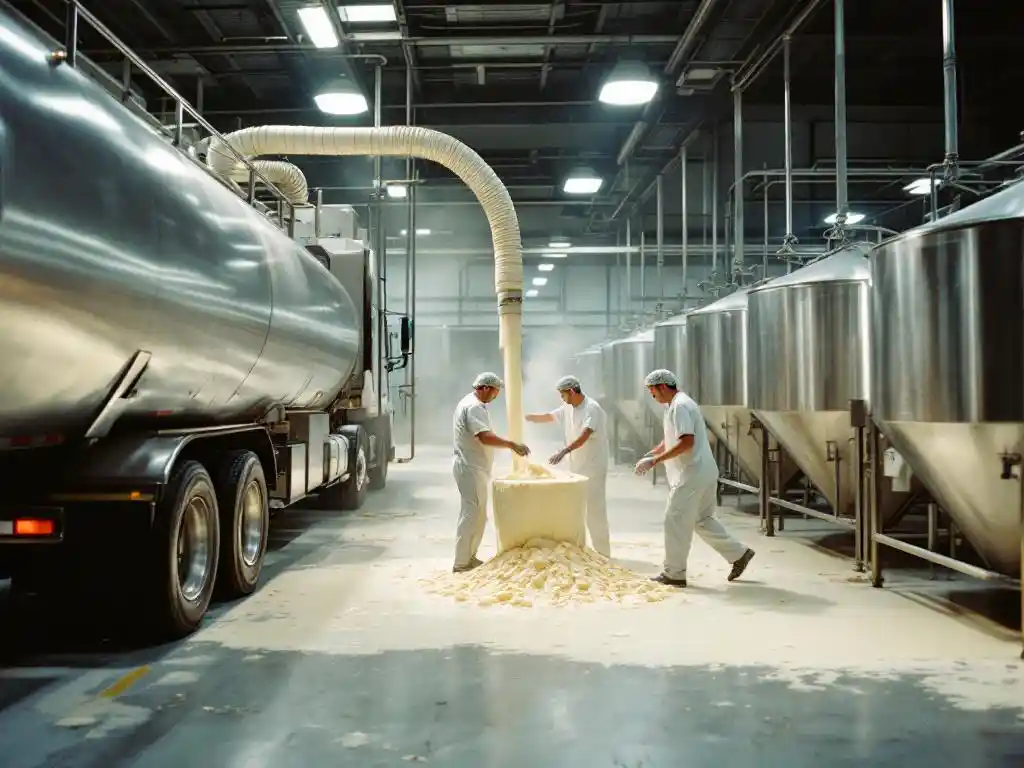
Industrial goat cheese supply involves delivering large quantities of goat cheese products to food manufacturers, restaurant chains, and processors in specialized bulk formats. Unlike retail packaging, industrial supply focuses on blocks, crumbles, and liquid forms designed for efficient integration into production lines. B2B customers require consistent quality, reliable volumes, and flexible packaging options that meet their specific manufacturing needs while maintaining strict food safety standards.
What exactly is industrial goat cheese supply and who needs it?
Industrial goat cheese supply refers to the large-scale distribution of goat cheese products specifically formatted for business use rather than consumer retail. This includes bulk packaging ranging from 5-kilogram blocks to 1,000-litre liquid containers, designed for easy handling in commercial kitchens and production facilities. The fundamental difference from retail supply lies in packaging efficiency, extended shelf life considerations, and the ability to customize products for specific applications.
Primary B2B customers span the food industry landscape. Food manufacturers use goat cheese as an ingredient in ready meals, salads, and frozen products. Restaurant chains incorporate it into menu items requiring consistent taste profiles across multiple locations. Meal kit companies need pre-portioned formats that maintain freshness during delivery. Food processors require specific textures and melting properties for applications like pizza toppings or pasta fillings.
These industrial buyers prioritize supply reliability above all else. A pizza manufacturer cannot afford inconsistent cheese deliveries that could halt production lines. Similarly, a salad producer needs exact crumble sizes for automated portioning systems. Quality consistency becomes crucial when products must taste identical whether produced in January or July, in London or Berlin.
How does the goat cheese supply chain work for industrial buyers?
The industrial goat cheese supply chain begins at specialized dairy farms focused on consistent milk production. These farms maintain specific goat breeds and feeding programmes to ensure stable milk composition throughout the year. From there, milk travels to production facilities equipped for large-scale cheese making, where standardized processes create products meeting exact specifications.
Quality control occurs at multiple stages throughout the supply chain. Raw milk undergoes testing for composition and safety parameters. During production, cheese makers monitor pH levels, moisture content, and texture development. Finished products receive microbiological testing and sensory evaluation before release. This multi-layered approach ensures every batch meets industrial standards.
Cold chain logistics play a critical role in maintaining product integrity. Temperature-controlled vehicles transport cheese from production facilities to distribution centres, then onwards to end users. Most industrial suppliers maintain temperatures between 2-4°C throughout transportation. GPS tracking and temperature monitoring provide real-time visibility, allowing buyers to verify proper handling.
Lead times vary based on product type and customization requirements. Standard products typically ship within 5-7 business days, while custom formulations may require 3-4 weeks for initial orders. Minimum order quantities often start at 500 kilograms for standard products, though this varies by supplier and product format.
What packaging and format options exist for industrial goat cheese?
Bulk packaging formats for industrial goat cheese address different production needs and applications. Block formats ranging from 5 to 20 kilograms work well for operations that dice or shred cheese in-house. These vacuum-sealed blocks maintain freshness while allowing flexible portioning. Crumbled formats come in 5-10 kilogram bags, pre-sized for specific applications like salad toppings or pizza preparation.
Liquid goat cheese represents an innovative format gaining popularity in industrial settings. Supplied in 200-1,000 litre containers, liquid cheese flows directly into production equipment, eliminating manual handling. This format works particularly well for sauce manufacturers and ready meal producers requiring precise dosing.
Pre-portioned options serve businesses needing exact quantities without in-house processing. These include:
- Individual portion cups (20-50 grams) for meal kits
- Pre-cut cubes in specific dimensions for salad bars
- Shredded cheese in portion-controlled bags
- Spreadable formats in bulk tubs for sandwich production
Packaging materials balance protection with sustainability. Food-grade plastics remain standard for direct contact, while outer packaging increasingly uses recyclable materials. Shelf life considerations drive packaging choices, with modified atmosphere packaging extending freshness for pre-cut formats. Most industrial packages feature clear labelling systems compatible with warehouse management software.
What certifications and quality standards matter for industrial goat cheese suppliers?
Food safety certifications form the foundation of industrial goat cheese supply relationships. HACCP (Hazard Analysis and Critical Control Points) certification demonstrates systematic approaches to identifying and controlling food safety risks. This certification has become a minimum requirement for most industrial buyers, particularly those supplying retail chains or exporting products.
BRC (British Retail Consortium) and IFS (International Featured Standards) certifications go beyond basic food safety. These comprehensive standards cover quality management, operational procedures, and personnel practices. Achieving high grades in these audits signals a supplier’s commitment to excellence and continuous improvement. Many multinational food companies mandate these certifications from all suppliers.
Quality consistency requirements extend beyond certifications to measurable product parameters. Industrial buyers typically specify:
- Moisture content tolerances (usually ±2%)
- Fat content ranges for nutritional consistency
- pH levels affecting shelf life and functionality
- Microbiological standards including pathogen absence and indicator organism limits
- Sensory profiles covering taste, texture, and appearance
Traceability systems enable rapid response to any quality concerns. Modern suppliers maintain electronic records linking finished products back through production batches to individual milk deliveries. This documentation supports recall procedures while demonstrating supply chain transparency increasingly demanded by industrial customers.
How do you choose the right goat cheese supplier for industrial needs?
Selecting an industrial goat cheese supplier requires evaluating multiple factors beyond price. Production capacity stands as a primary consideration: suppliers must demonstrate the ability to meet current volumes while accommodating future growth. This includes not just total capacity but flexibility to handle seasonal demand fluctuations common in food manufacturing.
Customization capabilities distinguish exceptional suppliers from adequate ones. The ability to adjust fat content, develop specific flavour profiles, or create unique textures enables food manufacturers to differentiate their products. Technical support becomes invaluable when developing new applications or troubleshooting production challenges. Suppliers with food technologists and application specialists can significantly accelerate product development timelines.
Geographic coverage affects both logistics costs and service reliability. Suppliers with multiple production sites or strategic distribution centres offer advantages in delivery flexibility and risk mitigation. International coverage becomes essential for businesses operating across borders, requiring suppliers familiar with varying regulatory requirements.
The evaluation process should include:
- Facility audits to verify production capabilities and hygiene standards
- Sample testing in actual production environments
- Reference checks with current industrial customers
- Financial stability assessment for long-term partnership viability
- Sustainability credentials aligning with corporate responsibility goals
Establishing long-term partnerships rather than transactional relationships yields benefits for both parties. Suppliers gain predictable volumes enabling better planning, while buyers receive priority during tight supply periods and collaborative support for innovation projects.
How DeJong Cheese Helps with Industrial Goat Cheese Supplies
At DeJong Cheese we combine traditional craftsmanship with modern industrial capabilities to serve B2B clients worldwide. Our team of 55 professionals produces high-quality goat cheese according to the strictest international certifications, including BRC and IFS standards. We supply to more than 20 countries and understand the unique challenges of industrial food production.
Our industrial solutions include:
- Flexible packaging options from 5 kg blocks to 1,000 litre liquid cheese
- Custom product development for specific applications
- Private label options with full confidentiality
- Technical support from our product development team
- Reliable deliveries with consistent quality throughout Europe
- Sustainable production with a focus on local milk suppliers
For more information about our products or to discuss your specific industrial needs, we invite you to contact us. Our experienced team is happy to help you find the right solution for your production challenges. Also discover our locations for local availability.
Frequently Asked Questions
How can I ensure my goat cheese supplier can handle sudden volume increases during peak seasons?
Request documentation of their surge capacity and ask about buffer stock arrangements. Reliable suppliers typically maintain 20-30% excess production capacity and can demonstrate how they’ve handled volume spikes for other clients. Consider establishing framework agreements that guarantee capacity allocation during your peak periods, and discuss their contingency plans including access to partner facilities.
What's the best way to transition from multiple small suppliers to a single industrial goat cheese supplier?
Start with a phased approach by initially sourcing 30-40% of your volume from the new supplier while maintaining existing relationships. Run parallel quality tests over 2-3 months to ensure consistency meets your standards. Gradually increase orders while monitoring performance metrics like on-time delivery, quality consistency, and responsiveness to issues before fully transitioning.
How do I calculate the true cost difference between retail and industrial goat cheese supply?
Beyond the per-kilogram price, factor in labour savings from bulk handling, reduced packaging waste disposal costs, and inventory carrying costs. Industrial supply typically reduces handling labour by 60-70% and can lower total costs by 25-40% when accounting for operational efficiencies. Request a total cost of ownership analysis from potential suppliers that includes these hidden savings.
What should I do if my industrial goat cheese arrives with quality issues?
Immediately document the issue with photos and retain samples, then contact your supplier’s quality team within 24 hours. Professional suppliers have rapid response protocols including replacement shipments within 48 hours and root cause analysis reports. Establish clear quality dispute procedures in your supply agreement, including credit terms and expedited replacement processes.
How can I verify that an industrial goat cheese supplier's sustainability claims are legitimate?
Request third-party certification documents such as B Corp status, carbon footprint assessments, or animal welfare certifications. Ask for specific metrics like percentage of locally sourced milk, renewable energy usage, and waste reduction achievements. Legitimate suppliers willingly share annual sustainability reports and can arrange visits to their farms and facilities.
What technical support should I expect from an industrial goat cheese supplier beyond just delivery?
Quality suppliers provide application technologists who can visit your facility to optimize cheese performance in your specific equipment. They should offer formulation assistance for new product development, troubleshooting support for production issues, and regular training sessions for your staff. Some suppliers even provide test kitchen facilities where you can trial new applications before full-scale production.
Related Articles
- Which internal stakeholders do you involve in selecting a cheese supplier?
- What role does texture play in choosing goat cheese for snack concepts?
- Can a Dutch producer consistently deliver large volumes of goat cheese crumbles?
- How to establish quality agreements with goat cheese producers?
- What are key quality indicators for bulk goat cheese?