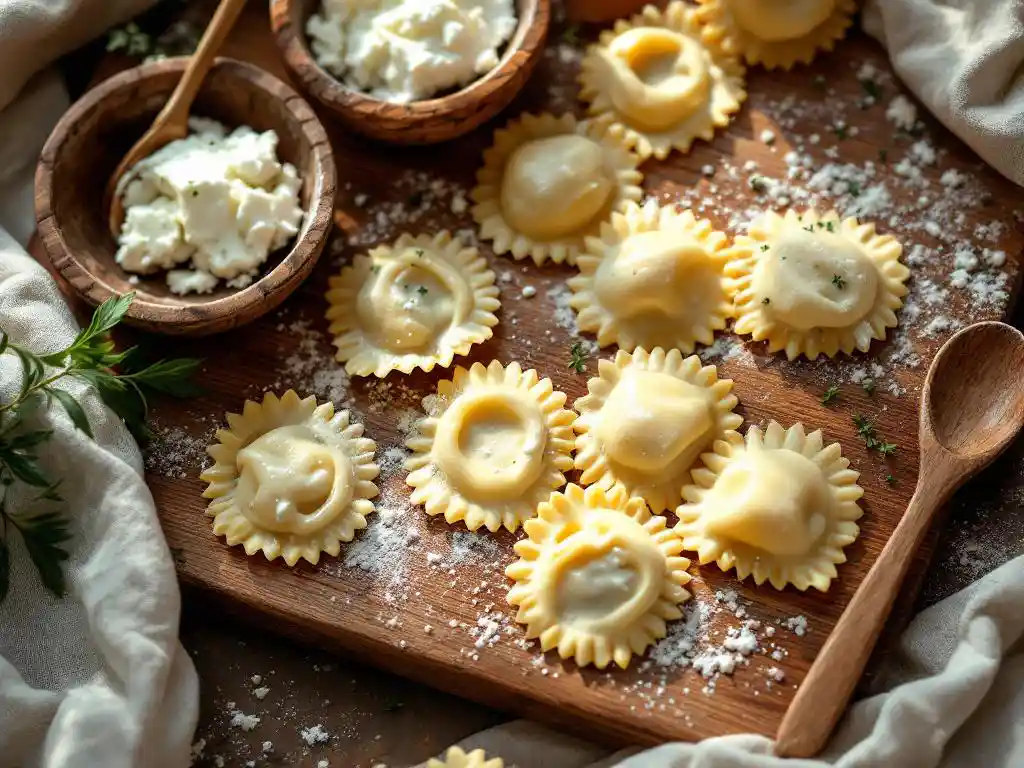
Goat cheese brings exceptional qualities to filled pasta products like ravioli and tortellini. Its creamy texture and tangy flavour create luxurious fillings that maintain consistency during cooking while offering versatility for various ingredient combinations. The cheese’s natural moisture content and melting properties make it particularly suitable for industrial pasta production, where consistent quality and performance are essential. Understanding how to work with goat cheese in filled pasta applications opens opportunities for creating distinctive products that appeal to discerning consumers.
What makes goat cheese ideal for filled pasta products?
Goat cheese possesses unique characteristics that make it particularly well suited to pasta fillings. Its naturally creamy texture creates smooth, spreadable fillings that pipe easily into pasta shells without breaking or tearing delicate dough. The cheese’s lower melting point compared with cow’s milk cheeses ensures it becomes beautifully creamy when heated without becoming greasy or separating.
The distinctive tangy flavour profile of goat cheese adds complexity to filled pasta without overwhelming other ingredients. This mild acidity cuts through rich sauces and complements both delicate herbs and robust vegetables. Fresh goat cheese contains approximately 70–80% moisture, creating fillings that remain moist during cooking while maintaining structural integrity.
For industrial production, goat cheese offers consistent performance across different cooking methods. Whether pasta is boiled, baked, or steamed, the cheese maintains its creamy texture without leaking through sealed edges. The protein structure in goat cheese creates stable emulsions when mixed with other ingredients, preventing separation during freezing and reheating cycles common in commercial distribution.
How do you prepare goat cheese filling for ravioli and tortellini?
Creating goat cheese fillings for commercial pasta production requires precise ratios and techniques. Start with fresh goat cheese at room temperature, which blends more easily and creates smoother textures. For every kilogram of goat cheese, add 100–150 grams of ricotta or mascarpone to adjust consistency and reduce tanginess while maintaining the signature goat cheese flavour.
Mix the cheeses using paddle attachments at low speed to avoid incorporating excess air, which can cause filling expansion during cooking. Season the base mixture with salt, white pepper, and nutmeg before adding other ingredients. For herb varieties, incorporate finely chopped fresh herbs at 2–3% of total filling weight to ensure even distribution without overpowering the cheese.
The ideal filling consistency resembles thick pastry cream: it should hold its shape when piped but spread slightly under gentle pressure. Achieve this by adjusting moisture content with small amounts of cream or breadcrumbs. For industrial applications, the filling should pipe smoothly through 8–12 mm nozzles without clogging while maintaining portion consistency.
Temperature control during preparation is crucial. Keep fillings below 10°C during mixing and portioning to prevent bacterial growth and maintain optimal texture. Allow 30 minutes of resting time after mixing for flavours to meld and consistency to stabilise before beginning production runs.
What are the best flavour pairings with goat cheese in filled pasta?
Classic herb pairings enhance goat cheese’s natural flavours without masking its distinctive character. Fresh thyme and goat cheese create an elegant combination that works particularly well in ravioli served with brown butter sauce. Basil adds brightness and complements the cheese’s tanginess, while oregano provides earthy notes that ground richer preparations.
Vegetable additions bring colour, texture, and nutritional value to goat cheese fillings. Spinach remains the most popular choice, with blanched and thoroughly drained leaves preventing excess moisture. Sun-dried tomatoes contribute umami depth and slight sweetness that balance the cheese’s acidity. Roasted red peppers, caramelised onions, and sautéed mushrooms each offer distinct flavour profiles that appeal to different market segments.
Nuts add textural interest and flavour complexity to goat cheese fillings. Toasted pine nuts provide subtle sweetness and crunch, while walnuts contribute earthiness that pairs beautifully with honey-drizzled preparations. Pistachios offer vibrant colour and mild flavour suitable for premium product lines. Toast nuts before incorporating them to enhance flavour and ensure they remain crisp during cooking.
Cheese blending creates balanced flavours for broader market appeal. Combining goat cheese with mild cow’s milk cheeses like ricotta or mozzarella reduces tanginess while maintaining a creamy texture. Aged cheeses like Parmesan or Pecorino Romano add savoury depth and help bind fillings. These combinations allow manufacturers to create products that introduce consumers to goat cheese in approachable formats.
How does goat cheese perform during pasta cooking and storage?
Goat cheese demonstrates excellent stability during standard pasta cooking processes. When properly sealed within pasta, the cheese maintains its creamy consistency throughout 3–5 minute boiling times without breaking down or becoming grainy. The proteins in goat cheese create stable emulsions that resist separation even when exposed to rapid temperature changes during commercial cooking processes.
Freezing capabilities make goat cheese ideal for extended distribution chains. Properly formulated fillings maintain quality for 6–12 months at -18°C without significant texture degradation. Upon thawing and cooking, the cheese returns to its creamy state without weeping or the graininess common in some dairy products. This stability enables manufacturers to produce larger batches and manage inventory efficiently.
Moisture management remains critical for preventing filling leakage during storage and cooking. Goat cheese fillings should contain 65–70% total moisture for optimal performance. Lower moisture levels create dry, crumbly textures, while higher levels risk leaking through pasta seams. Adding stabilisers like modified starch at 1–2% can help bind excess moisture without affecting flavour or mouthfeel.
Shelf-life considerations vary between fresh and frozen products. Fresh goat cheese-filled pasta maintains quality for 7–10 days under refrigeration, while frozen products extend viability to 12 months. Modified-atmosphere packaging with reduced oxygen levels can extend refrigerated shelf life to 14–21 days, providing flexibility for retail distribution.
What production considerations apply to goat cheese-filled pasta?
Industrial-scale production requires careful attention to filling consistency throughout extended runs. Goat cheese fillings should be maintained at 4–6°C during portioning to ensure consistent flow rates and portion weights. Implement regular viscosity checks every 30 minutes, adjusting with small amounts of cream if thickening occurs due to temperature fluctuations or extended holding times.
Portion control directly impacts product consistency and profitability. Standard ravioli portions range from 15–20 grams of filling, while tortellini typically contain 8–12 grams. Volumetric depositors work well for goat cheese fillings, providing accuracy within ±5% when properly calibrated. Regular weight checks ensure portions remain consistent across production runs.
Sealing techniques must accommodate goat cheese’s creamy texture and moisture content. Ultrasonic sealing provides superior results compared with traditional heat sealing, creating stronger bonds that resist leakage during cooking. Ensure pasta edges remain free of filling contamination, as cheese residue prevents proper sealing and causes product failure during cooking.
Quality control measures should address both safety and consistency. Implement metal detection after filling to prevent contamination, and conduct regular seal integrity tests using vacuum chambers. Visual inspection systems can identify improperly sealed or underfilled products before packaging. Establish hold-and-test protocols for each batch, cooking samples to verify that filling performance and flavour profile meet specifications.
How DeJong Cheese supports filled pasta manufacturers
We understand the unique challenges pasta manufacturers face when working with goat cheese fillings. Our specialised fresh goat cheese products are specifically formulated for industrial applications, providing the consistent quality and performance your production lines demand. Our technical team works directly with manufacturers to develop custom blending solutions that meet specific flavour profiles and processing requirements.
Our foodservice solutions for pasta manufacturers include:
- Bulk packaging options from 5 kg to 1000 kg containers designed for efficient production line integration
- Consistent moisture content and texture specifications that ensure reliable filling performance
- Custom blending capabilities to create signature flavour profiles for private-label products
- Technical support for optimising filling formulations and troubleshooting production challenges
- Flexible delivery schedules aligned with your production planning
- Complete documentation including specifications, certificates, and traceability for food safety compliance
Our commitment to quality begins with traditional cheese-making methods that create superior flavour and texture. We maintain the highest food safety certifications, ensuring our products meet international standards for B2B customers across more than 20 countries. Whether you need standard fresh goat cheese or custom-blended preparations for unique pasta products, we provide the expertise and flexibility to support your success.
Ready to enhance your filled pasta products with premium goat cheese? Contact our team to discuss your specific requirements and request samples for testing.
Frequently Asked Questions
How can I prevent goat cheese filling from leaking during home pasta making?
Ensure your goat cheese filling is well-chilled before use and avoid overfilling your pasta. Pat the cheese mixture with paper towels to remove excess moisture, and leave at least a 1cm border around the edges for proper sealing. Use egg wash on the pasta edges and press firmly with a fork or pasta wheel to create a tight seal.
What's the best way to transition from cow's milk cheese to goat cheese in existing pasta recipes?
Start by substituting 30% of your current cheese with goat cheese, gradually increasing the ratio as customers adapt to the flavour profile. Blend goat cheese with familiar cheeses like ricotta or mozzarella to maintain texture while introducing the tangy notes. Consider adding a touch of honey or cream to balance the acidity in your initial formulations.
How do I calculate the correct salt levels when using goat cheese in pasta fillings?
Goat cheese typically contains 1-1.5% salt, so reduce added salt in your filling recipe by approximately 25% compared to cow’s milk cheese formulations. Always conduct taste tests on cooked samples, as salt perception changes after boiling. For commercial production, aim for a final salt content of 1.8-2.2% in the total filling mixture.
What equipment modifications are needed for processing goat cheese fillings on existing pasta lines?
Most standard pasta filling equipment handles goat cheese well, but you may need to adjust hopper temperatures to maintain 4-6°C and increase agitation frequency to prevent settling. Consider installing variable-speed controls on depositors to accommodate the cheese’s flow characteristics. Teflon-coated nozzles can prevent sticking and ensure smooth portioning.
How can I extend the shelf life of fresh goat cheese-filled pasta without freezing?
Implement modified atmosphere packaging with 30% CO2 and 70% N2 to extend refrigerated shelf life to 21 days. Add natural preservatives like cultured dextrose at 0.5% or rosemary extract at 0.1% to inhibit microbial growth. Ensure your cold chain maintains 0-4°C throughout distribution, and consider high-pressure processing (HPP) for premium products requiring 30+ day shelf life.
What are common troubleshooting solutions for grainy or separated goat cheese fillings?
Graininess usually indicates overheating or excessive mixing speed – keep temperatures below 10°C and use low-speed paddle mixing. If separation occurs, add 1-2% modified corn starch or 0.5% xanthan gum to stabilise the emulsion. For persistent issues, check the age of your goat cheese; fresher cheese (less than 7 days old) performs better in fillings.