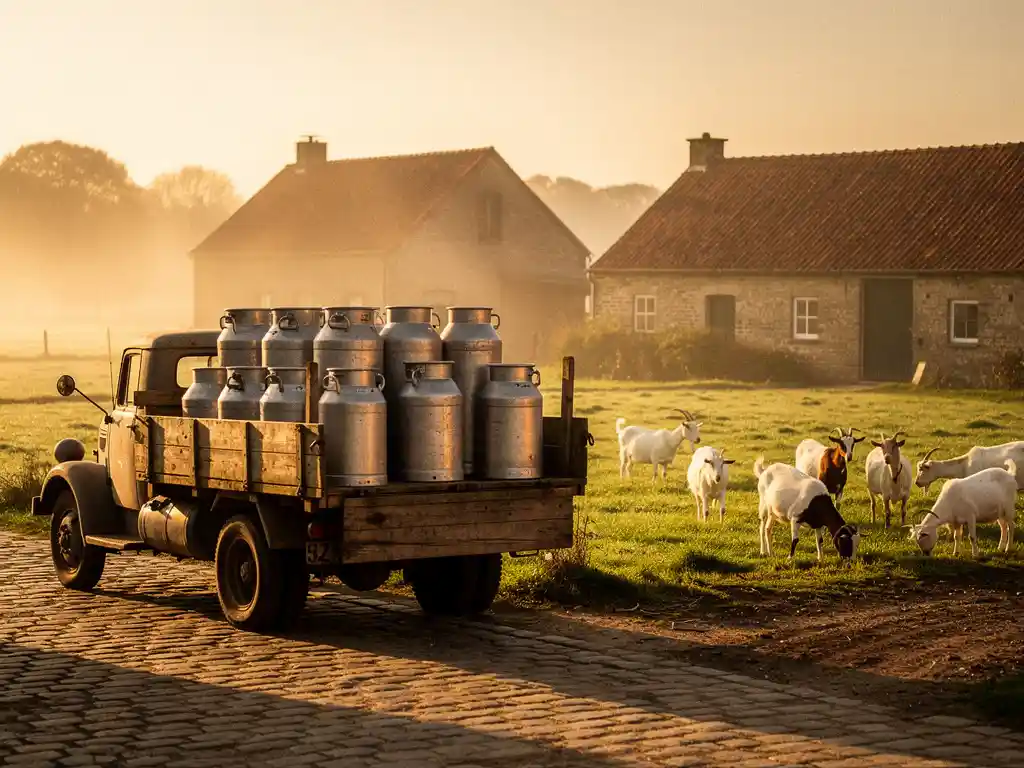
In the food industry, the origin of raw materials plays an increasingly important role in supplier selection. For buyers like Marco Visser, who are responsible for the quality and reliability of cheese products in their production processes, choosing a cheese supplier that sources milk locally can make a significant difference. Local milk sourcing offers concrete advantages in terms of logistics, freshness, supply security, and sustainability. In this article, we answer the most important questions about what local milk sourcing means for your business and why this can be a decisive factor when choosing the right cheese supplier.
What does it mean when a cheese supplier sources milk locally?
A cheese supplier that sources milk locally obtains its raw materials directly from dairy farmers in the immediate vicinity of the production location, usually within a 50-kilometer radius. This means that the milk is processed into cheese the same day, without long transport times or intermediate storage. With local sourcing, the cheese supplier often works with established groups of farmers who meet specific quality requirements.
Local milk sourcing goes beyond just geographical proximity. It means that the cheese supplier maintains direct relationships with dairy farmers, regularly visits the farms, and can influence milk quality. These suppliers know their milk producers personally and can respond quickly to quality questions or specific customer requirements. For industrial processors such as ready-meal or pizza producers, this means they can rely on consistent raw material quality.
The difference from non-local sourcing is significant. Large dairy cooperatives collect milk from across the country or even internationally, where the milk is sometimes in transit for days before being processed. With local sourcing, on the other hand, the milk comes from the farm in the morning and is processed into cheese the same day. This short timeframe between milking and processing has direct consequences for the freshness, taste, and technical properties of the final products.
How does local milk sourcing affect transport costs for industrial customers?
Local milk sourcing results in lower transport costs that flow through to the final price for industrial customers, with savings of 15 to 25 percent on average on total logistics costs. This cost reduction stems from shorter transport distances for milk, more efficient route planning, and lower fuel consumption. For large customers in the food industry, this translates directly to a more competitive purchase price.
The cost advantages manifest at various levels. First, there are direct transport savings: milk transport over short distances costs less fuel and requires less driver time. A milk truck operating within a 50-kilometer radius can make multiple trips per day, while long-distance transport often takes entire days. This efficiency flows through to the milk price that the cheese supplier pays.
Second, local milk sourcing ensures more stable prices. Transport costs fluctuate with fuel prices, but with short distances, this impact is much smaller. For buyers, this means more predictable prices and simpler budget planning. Moreover, local suppliers can respond more quickly to volume changes without this leading to major cost increases, because the logistics chain is more flexible.
An additional advantage is the possibility of consolidating transports. When milk processing takes place close to milk production, outgoing cheese transports can also be planned more efficiently. This is especially relevant for industrial customers who purchase large volumes and benefit from just-in-time deliveries.
What are the advantages for freshness and shelf life with local milk processing?
Local milk processing delivers cheese products with superior freshness because the milk is processed within 24 hours of milking, resulting in an average 20 to 30 percent longer shelf life. This rapid processing optimally preserves the natural properties of milk, which translates to better taste, texture, and functionality in industrial applications.
The scientific basis behind this is clear: milk begins to change immediately after milking through natural enzymatic processes and bacterial activity. The shorter the time between milking and processing, the less these processes affect milk quality. With local processing, important protein structures remain intact, which is crucial especially for industrial processors. These intact proteins ensure better melting and processing properties, essential for applications in pizzas, ready meals, and other heated products.
For fresh cheese products such as spreadable goat cheese or fresh cheese blocks, rapid processing means that natural moisture content is better preserved. This results in a creamier texture and longer shelf life without adding artificial stabilizers. Industrial processors benefit from this because their final products can have a cleaner ingredient list, which aligns with consumer demand for natural products.
The shelf life advantages are measurable in practice. Fresh goat cheese from locally processed milk, for example, maintains its optimal processing properties throughout the entire shelf life, while products from milk transported from further away often show quality loss after two-thirds of the shelf life. For production planners in the food industry, this means more flexibility in inventory planning and less product waste.
How does local sourcing ensure more reliable delivery guarantees?
Local milk sourcing creates a more robust supply chain with 40 percent fewer disruptions than international chains, because the cheese supplier has direct control over its raw material supply. These short lines between dairy farmer and cheese producer ensure rapid communication, flexible planning, and avoidance of complex logistical bottlenecks that can occur with long-distance transport.
Reliability begins with the relationship between cheese supplier and dairy farmer. With local sourcing, producers often work with the same farming families for generations. These long-term partnerships create mutual dependence and loyalty. Dairy farmers give priority to their local customer, even during times of milk shortage. For industrial customers, this translates to guaranteed deliveries, even during peak periods or market disruptions.
Practically speaking, local sourcing means that external factors such as international transport strikes, border controls, or extreme weather conditions elsewhere have no impact on milk supply. A snowstorm in the Alps does not affect milk deliveries from North Brabant. This geographical independence is crucial for industrial processors who cannot halt their production due to raw material shortages.
The flexibility of local chains becomes especially apparent with sudden volume changes. When a pizza producer unexpectedly receives a large order, a local cheese supplier can quickly scale up by purchasing additional milk from known farmers. This responsiveness is possible because all parties know each other and can switch quickly. Communication lines are short: a phone call is often sufficient to arrange extra capacity, where international chains require weeks of planning.
What sustainability advantages does a cheese supplier with local milk sourcing offer?
A cheese supplier with local milk sourcing reduces transport CO2 emissions by 60 to 75 percent compared to international milk chains, directly contributing to the sustainability goals of industrial customers. This lower carbon footprint results from shorter transport distances, less cooling during transport, and more efficient logistics, aspects that are becoming increasingly important for companies with ESG reporting obligations.
The sustainability impact goes beyond just transport emissions. Local dairy farmers can more easily switch to more sustainable practices when they have a permanent customer nearby. Consider pasture grazing, where cows graze outside instead of being housed year-round. This is economically only viable when the milk price justifies this and transport remains efficient. Local cheese suppliers can directly translate this added value to their products, helping industrial customers make their own product portfolio more sustainable.
For companies in the food industry, sustainability is increasingly becoming a competitive advantage. Consumers and retailers demand transparency about the origin of ingredients. A pizza producer who can indicate that the cheese on their pizzas is made from regional milk has a strong story for their customers. This local story is authentic and verifiable, unlike vague sustainability claims.
The economic sustainability of the region also benefits. Local milk sourcing keeps dairy farms viable, preserves employment in rural areas, and supports the local economy. For industrial customers who value corporate social responsibility, this is an important aspect. They can demonstrate that their purchasing contributes to preserving the Dutch cultural landscape and agricultural sector.
What are the compliance and certification advantages of local dairy chains?
Local dairy chains simplify compliance because all links fall under the same national laws and regulations, leading to 50 percent fewer administrative burdens and faster certification processes. For industrial customers, this means simpler audits, consistent quality standards, and direct traceability from milk to final product, essential for food safety certifications such as IFS Food.
The compliance advantage begins with uniformity of regulation. Dutch dairy farmers and cheese producers all work according to the same NVWA guidelines, use identical registration systems, and apply comparable quality protocols. This contrasts with international chains where each link may apply different standards. For quality managers at industrial processors, this means they can work with one set of documents and procedures.
Traceability, a core requirement in modern food safety, is inherently simpler with local chains. The route from cow to cheese is short and clear. In case of a quality question or recall, it can be determined exactly which milk ended up in which product within hours. This rapid traceability is not only a compliance requirement but also a practical advantage when solving quality issues.
Audits and inspections proceed more efficiently with local chains. Inspectors can visit all links in one day, which shortens the lead time of certification processes. For industrial customers who regularly audit their suppliers, this means lower travel costs and time savings. Moreover, everyone speaks the same language, literally and figuratively, which prevents misunderstandings and facilitates communication about quality requirements.
How De Jong Cheese helps with local milk sourcing for your cheese needs
As a family business since 1995, we at De Jong Cheese have consciously chosen local milk sourcing from Brabant dairy farmers within a 30-kilometer radius around our production location in Alphen. This strategy enables us to provide industrial customers such as pizza producers and ready-meal manufacturers with fresh and aged goat cheese specialties with guaranteed quality and delivery security.
Our local approach offers concrete advantages for your production process:
- Fresh goat cheese products with 23 weeks shelf life thanks to rapid processing
- Flexible deliveries from small test batches to full pallet loads
- Direct traceability of every batch to individual milk deliveries
- Stable prices through short transport lines and fixed supplier relationships
- IFS Food certification with full compliance to Dutch food safety requirements
- Technical support in product development thanks to our 30 years of experience
For industrial processors who value reliability and sustainability, our local milk sourcing offers the assurance of consistent quality. Whether you use our standard pizza cheese range or develop a private label product together with us, you always benefit from the short lines in our supply chain.
Would you like to experience how local milk sourcing makes the difference for your production? Contact our team for a personal conversation about your specific cheese needs. Also visit our showroom in Alphen to taste our complete range and experience the quality of locally produced cheese yourself. Discover more about our company and our methods on our website.
Frequently Asked Questions
How can I as a buyer verify that a cheese supplier actually sources milk locally?
Ask for concrete documentation such as milk receipts with addresses of milk suppliers, visit the production location to see the supply routes, and check whether the supplier is transparent about their dairy farmers. Serious local suppliers gladly share their story and can even put you in contact with their milk producers for verification.
What are typical minimum order quantities with cheese suppliers with local milk sourcing?
Local cheese suppliers are often more flexible in minimum orders than large industrial producers, with orders from 100-200 kg per product type. Due to their smaller-scale and flexible production, they can also deliver test batches of 25-50 kg for product development, which is ideal for testing new recipes before you scale up.
How does seasonal change affect availability and quality with local milk sourcing?
Local milk shows natural seasonal variations in fat content and taste due to changing feed (fresh grass versus silage), but local suppliers can better manage these variations through direct communication with dairy farmers. They adjust their production processes to guarantee consistent product quality and proactively inform customers about any adjustments in specifications.
What backup scenarios do local cheese suppliers use in case of calamities such as animal diseases?
Professional local cheese suppliers work with multiple dairy farmers in their region and have emergency protocols with fellow producers for temporary milk sourcing. Through strong local networks, they can quickly activate alternative milk sources within the same quality standards, where the geographical spread of suppliers minimizes the risk of total failure.
How do I integrate the sustainability data of local cheese sourcing into my own ESG reporting?
Ask your local cheese supplier for specific CO2 reduction figures, transport kilometers, and sustainability certificates from their milk suppliers. Many local suppliers can provide detailed carbon footprint calculations per kilogram of cheese, including comparisons with non-local alternatives, which you can directly include in your scope 3 emission reports.
What are the cost differences between local and international cheese suppliers in the long term?
While the initial price per kilogram with local suppliers is sometimes 5-10% higher, the lower transport costs, better shelf life (20-30% longer), lower waste, and more stable prices often result in 8-15% lower total costs over a year. Calculate your total cost of ownership including inventory costs, product waste, and administrative burdens for a fair comparison.
Related Articles
- How do you scale up the procurement of aged goat cheese with growing production volumes?
- What are the benefits of consistent goat cheese supply partnerships?
- What makes premium goat cheese worth the investment?
- How does BRC certification benefit goat cheese buyers?
- Goat cheese vs cottage cheese nutritionally?