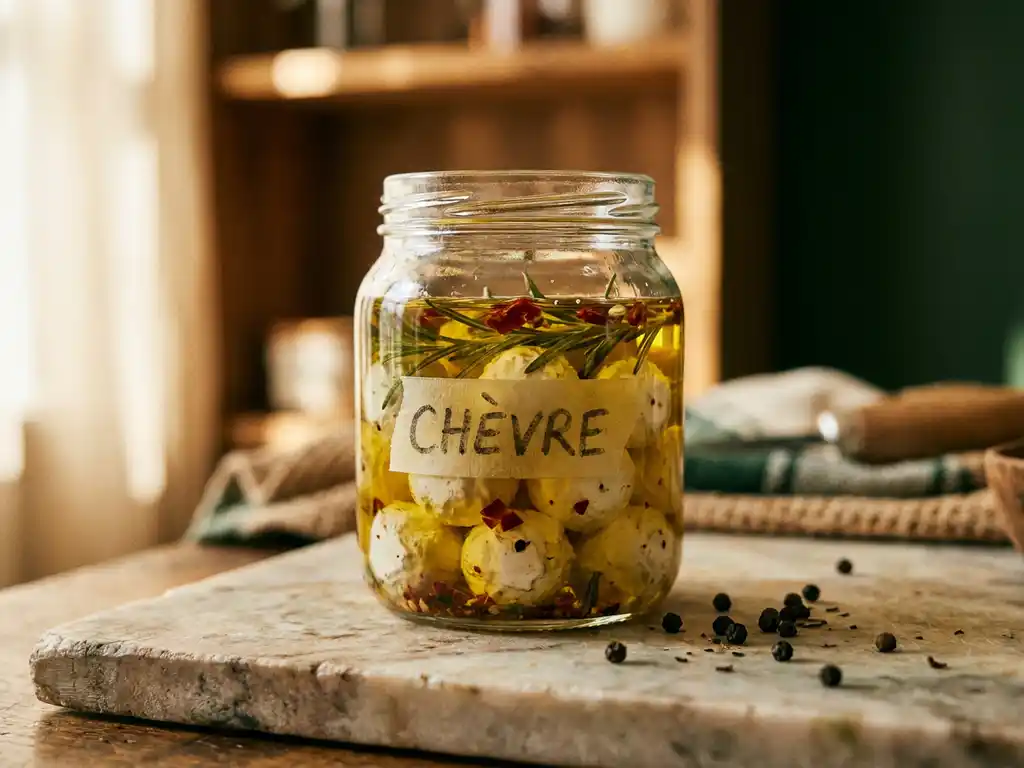
Goat cheese balls in oil are a strong premium snack concept because they combine artisanal quality, visual appeal, and versatility in one product. The soft, creamy texture of fresh goat cheese absorbs the flavors of herbs and oil in a way that other cheeses simply can’t match. That’s what sets them apart on a charcuterie board or in a specialty range. In this article, we answer the most common questions about this product — from flavor varieties to shelf life and choosing the right supplier.
What flavor varieties are available for goat cheese balls in oil?
Goat cheese balls in oil come in a wide range of flavors. Herbs, spices, and aromatic oils form the base. Popular options include Provençal herbs, rosemary and thyme, sun-dried tomato, black pepper, or chili pepper. Premium varieties feature truffle oil, lemon zest, or roasted garlic for a more refined flavor profile.
The right flavor depends on how you plan to use the product and who you’re selling to. Mediterranean herb varieties work great on a classic charcuterie board. Truffle or black pepper fits better with a more upscale, trend-forward positioning. Seasonal varieties — like a winter version with star anise or a summer version with basil and lemon — give product developers extra options to refresh their range. The oil itself also plays a big role in the overall flavor. Whether you use olive oil, sunflower oil, or a flavored variety makes a real difference in the final product.
How does goat cheese in oil differ from other cheese snacks?
Goat cheese in oil stands out from other cheese snacks in a few key ways. It has a soft, creamy texture, a distinctly tangy flavor, and it’s marinated in oil — which both preserves and enriches it. Hard cheese snacks like Gouda or Parmesan cubes have a dry, firm bite. Soft goat cheese gives you a smooth, melt-in-your-mouth experience that instantly feels premium.
Goat cheese also naturally contains less fat than many cow’s milk cheeses, and some consumers find it easier to digest. That makes it appealing to a wide audience looking for quality products. Presentation in a jar or container with oil also gives the product a visually distinctive look compared to cheese snacks in plastic bags or trays. That visual element is a direct selling point — both on the charcuterie board and on the shelf.
What can you use goat cheese balls in oil for?
Goat cheese balls in oil are incredibly versatile. You can use them as a snack, an ingredient, or a presentation element. The most obvious use is on a charcuterie or snack board, but they also work great as a topping on salads, pizza, pasta, or grilled vegetables. In foodservice, they’re used as an amuse-bouche or as part of a cheese board presentation.
For product developers, the balls offer interesting possibilities as a premium ingredient in ready-made meals, filled wraps, or upscale sandwiches. The oil they’re stored in can also be used as a flavorful dressing or dipping sauce — adding even more value to the product. In retail, they work as an impulse buy in the specialty aisle. In foodservice, they’re a deliberate menu choice. Check out our retail offering for more inspiration on how this product shines on the shelf.
How long do goat cheese balls in oil last?
Goat cheese balls in oil have a shelf life that ranges from a few weeks to several months. It depends on the production process, the oil used, and the packaging. Unopened jars with a proper vacuum seal can last several months at room temperature or in the refrigerator. Once opened, refrigeration is recommended, and the product should typically be consumed within one to two weeks.
The oil plays an important role as a preservative. It protects the cheese from air and prevents it from drying out. Producers who use a controlled production process and hygienic packaging can achieve longer shelf lives — a significant logistical advantage for both retail and foodservice. For industrial buyers, shelf life is a critical specification that directly affects supply chain planning and inventory rotation.
What makes goat cheese balls in oil a premium product?
Goat cheese balls in oil tick all the boxes that consumers and buyers associate with quality: artisanal production, recognizable ingredients, visual appeal, and a distinctive flavor profile. The product naturally positions itself in the higher segment because of its specialty character.
- Clean label: Fresh goat cheese, oil, and herbs are simple, recognizable ingredients with no additives. That fits perfectly with the growing demand for transparent products.
- Artisanal appeal: Handmade balls presented in oil bring to mind traditional European cheese specialties.
- Versatility: The product fits multiple consumption occasions — from a casual snack to a full culinary meal — which increases its perceived value.
- Stands out on the shelf: Compared to standard cheese products, a jar of goat cheese balls in oil immediately draws attention through color, texture, and presentation.
- On-trend: Varieties with truffle, red onion, or specialty herbs tap into current food trends, making the product relevant for innovative retailers and foodservice concepts.
For product developers working on premium private label concepts or specialty lines, this product offers a strong foundation that connects with the end consumer — both functionally and emotionally.
How do you choose the right supplier for goat cheese balls in oil?
Choose your supplier based on four criteria: consistent product quality, flexibility for custom work, reliable high-volume delivery, and proven food safety standards. A supplier that only offers standard products with no room for customization isn’t the right fit for businesses that want to build a distinctive range.
Key things to look at when choosing a supplier:
- Technical specifications: Ask about fat content, moisture content, pH value, and microbiological standards to assess whether the product fits your production line or range.
- Customization options: Can the supplier work with your flavor profile, packaging preferences, or private label design?
- Delivery track record: Does the supplier have proven experience delivering consistently to retail, foodservice, or industrial clients?
- Certifications: Check for relevant food safety certifications that meet your compliance requirements.
- Communication and support: A supplier who thinks along with you during product development and responds quickly to questions is a big plus — for both buyers and product developers.
For foodservice applications, there are additional requirements around portioning and packaging formats that should also factor into your supplier decision.
How DeJong Cheese helps with goat cheese balls in oil
As a family business with more than thirty years of experience in goat cheese specialties, DeJong Cheese offers a complete solution for buyers and product developers looking for a reliable partner for goat cheese balls in oil. We produce under the Alphenaer brand, but we also supply on a private label basis — fully tailored to your specifications and market positioning.
What we offer:
- Consistent quality fresh goat cheese, produced using traditional recipes in Alphen
- Flexible flavor varieties and customization options — from classic herb varieties to premium concepts with truffle or specialty herbs
- High-volume delivery to retail, foodservice, and industry worldwide
- Technical support for product development and flavor composition
- Proven food safety standards and full documentation for compliance
Want to know what we can do for your specific concept? Get in touch — we’d love to think along with you.
Frequently Asked Questions
Can I have goat cheese balls in oil custom flavored as a private label product?
Yes, most specialized suppliers like DeJong Cheese offer full customization options for private label concepts. This means you can determine the flavor profile, herb mix, type of oil, and label design yourself. It’s a good idea to agree on a technical trial run with the supplier during the development phase, so you can validate the final product on taste, texture, and shelf life before scaling up to production.
What minimum order quantities typically apply for a supplier of goat cheese balls in oil?
Minimum order quantities (MOQs) vary widely by supplier and depend on the type of product, packaging format, and any customization involved. For standard products, MOQs are often lower than for private label or made-to-order varieties. It’s important to discuss this early in the buying process, so you can align MOQs with your expected inventory rotation and storage capacity.
Are goat cheese balls in oil suitable for consumers with lactose intolerance?
Fresh goat cheese naturally contains less lactose than many cow’s milk cheeses, but it is not completely lactose-free. Some consumers with mild lactose intolerance tolerate goat cheese better due to its smaller fat globules and slightly different protein composition. For a formal lactose-free claim, additional laboratory analysis is required. Discuss this with your supplier if it’s relevant to your target audience or product labeling.
What is the best way to use goat cheese balls in oil in a ready-made meal or industrial product?
When using them in ready-made meals, it’s important to account for the soft texture of the cheese, which is sensitive to high temperatures and mechanical stress. Add the balls preferably as a finishing ingredient or after the heat treatment, so the shape and texture are preserved. Also discuss the technical specifications with your supplier — such as moisture content and pH value — because these directly affect how the cheese interacts with other ingredients and the shelf life of the final product.
What are common mistakes when presenting goat cheese balls in oil on a charcuterie board or on the shelf?
A common mistake is serving the balls straight from the refrigerator. At room temperature, they develop a much creamier and fuller flavor profile. On the shelf, a lack of visibility of the contents is a missed opportunity: a glass jar or transparent packaging enhances visual appeal and immediately communicates premium quality. When presenting on a charcuterie board, also include a small spoon or cocktail pick so the experience feels polished and complete.
How can I objectively assess the quality of goat cheese balls in oil from a new supplier?
Always ask for a technical data sheet with specifications such as fat content, moisture content, pH value, and microbiological standards, and compare these with your own product requirements. Also have a physical sample evaluated on texture, flavor consistency, and presentation after opening and after storage for the full shelf life period. A reliable supplier makes this information transparently available and is willing to facilitate an audit process or factory visit.
What packaging formats are available for foodservice versus retail?
For retail, goat cheese balls in oil are typically offered in smaller jars or containers of 100 to 250 grams, aimed at the individual consumer or household. In foodservice, larger formats are standard — such as jars of 500 grams to several kilograms — which are more efficient for kitchen use or catering setups. Some suppliers also offer portion packs for restaurants that want to serve the product as an amuse-bouche or as part of a menu presentation. Always discuss your specific needs with the supplier in advance.
Related Articles
- How do you build a business case for a new cheese supplier to present to management?
- How do you keep artisanal quality when scaling up to industrial volumes?
- What are the advantages of goat cheese over cow cheese in industrial pizza applications?
- How can goat cheese enhance premium salad offerings?
- What wine pairs well with goat cheese?