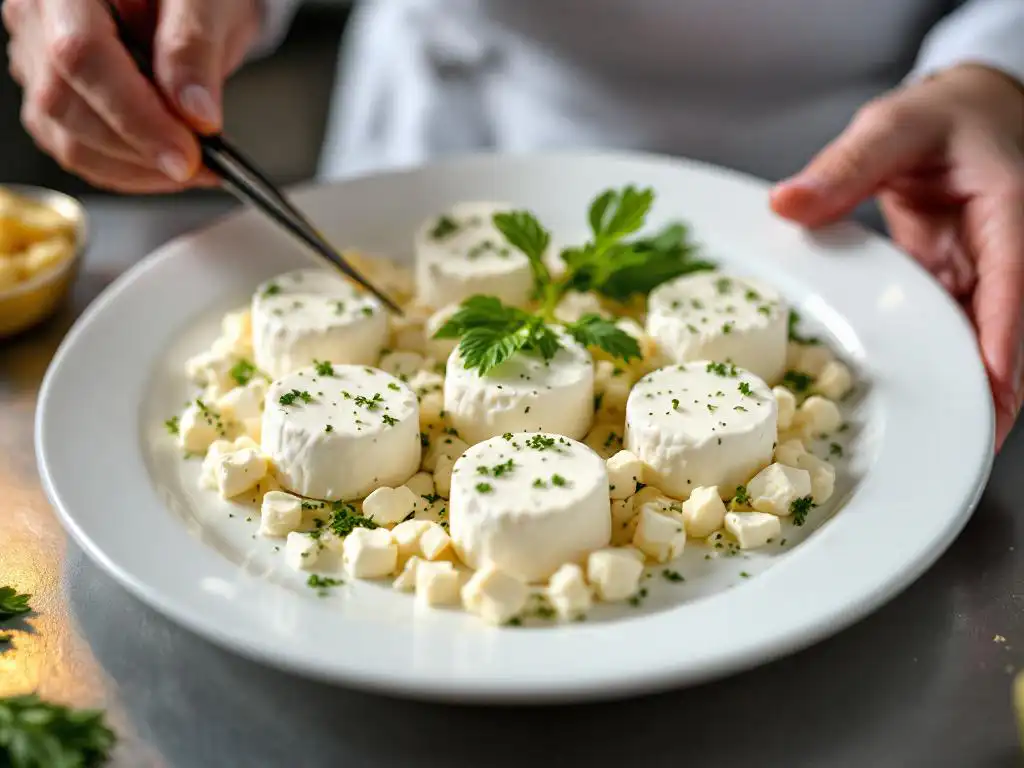
Goat cheese has become increasingly valuable in professional kitchens due to its unique properties that address multiple foodservice needs. Its distinctive tangy flavour, creamy textures ranging from fresh to aged varieties, and excellent versatility across hot and cold applications make it an essential ingredient for modern menus. Professional kitchens particularly benefit from goat cheese’s easier digestibility compared to cow’s milk cheese, its superior melting characteristics, and its ability to accommodate various dietary preferences while maintaining consistent quality during service periods.
What makes goat cheese different from other cheeses in foodservice settings?
Goat cheese stands apart in professional kitchens primarily due to its distinctive tangy flavour profile and versatile range of textures. The smaller fat molecules in goat’s milk create a naturally creamier texture that performs exceptionally well across various cooking methods. This unique composition also makes goat cheese easier to digest for many customers who struggle with traditional dairy products.
The flavour complexity of goat cheese provides chefs with a powerful tool for menu differentiation. Its characteristic tanginess ranges from mild in fresh varieties to more pronounced in aged versions, offering multiple options for different dishes and flavour profiles. This versatility allows kitchens to use a single cheese type across appetisers, main courses, and desserts, simplifying inventory while expanding menu possibilities.
Professional kitchens particularly value goat cheese’s stability across temperature ranges. Unlike many cow’s milk cheeses that can become grainy or separate when heated, goat cheese maintains its creamy consistency whether served cold in salads or melted into hot dishes. This reliability reduces waste and ensures consistent presentation throughout service.
How does goat cheese perform in high-volume kitchen operations?
Goat cheese demonstrates exceptional performance characteristics in busy professional kitchens, particularly with regard to its melting properties and heat stability. The cheese melts evenly without excessive oil separation, maintaining its creamy texture even under salamanders or in high-temperature ovens. This consistency allows line cooks to prepare dishes with confidence during peak service times.
Storage and handling requirements for goat cheese align well with professional kitchen needs. Fresh goat cheese typically maintains quality for 2–3 weeks when properly refrigerated, while aged varieties can last several months. The natural rind on aged varieties provides additional protection against moisture loss, reducing waste from dried edges common with other cheeses.
Portion control becomes simpler with goat cheese due to its soft, spreadable consistency in fresh forms and clean slicing properties in aged varieties. Kitchen staff can quickly portion exact amounts for consistent plating and food costs. Pre-portioned logs and medallions further streamline prep work, allowing kitchens to maintain speed without sacrificing accuracy during service.
What are the most profitable goat cheese applications for restaurants?
High-margin menu applications for goat cheese include signature salads, artisanal pizzas, and premium cheese boards that command higher price points. A simple goat cheese salad can achieve food costs below 30% while selling at premium prices due to its perceived value. Pizzas featuring goat cheese typically allow for £2–3 upcharges compared to standard mozzarella options.
Appetiser applications prove particularly profitable, with goat cheese crostini, stuffed peppers, or baked goat cheese dishes requiring minimal additional ingredients while creating impressive presentations. These items often achieve the highest profit margins on menus, with food costs ranging from 20–25% due to small portion sizes and high perceived value.
Pasta dishes incorporating goat cheese create opportunities for both profitability and operational efficiency. The cheese’s natural creaminess eliminates the need for heavy cream in many recipes, reducing both cost and preparation time. Menu items like goat cheese ravioli or creamy goat cheese sauces can support price points 15–20% higher than traditional cream-based alternatives while actually reducing ingredient costs.
Which dietary trends make goat cheese essential for modern menus?
Growing awareness of lactose sensitivity has positioned goat cheese as a valuable alternative for customers seeking easier-to-digest dairy options. The different protein structure and lower lactose content in goat’s milk products allow many lactose-sensitive individuals to enjoy goat cheese without discomfort. This accommodation expands potential customer bases without requiring separate lactose-free product lines.
Mediterranean and health-conscious dining trends strongly favour the inclusion of goat cheese. As a naturally lower-fat option compared to many aged cow’s milk cheeses, goat cheese aligns with health-focused menu positioning. Its protein content and probiotic properties in fresh varieties appeal to customers seeking nutritious options without sacrificing flavour or satisfaction.
The premium ingredient trend has elevated goat cheese from a specialty item to an expected menu component in quality-focused establishments. Modern diners increasingly seek artisanal, locally sourced, and distinctive ingredients that justify higher price points. Goat cheese satisfies these expectations while providing practical benefits for kitchen operations and consistent availability throughout the year.
How does bulk packaging affect goat cheese quality and costs?
Bulk packaging formats for foodservice significantly impact both product quality and operational costs. Vacuum-sealed logs of 1–2 kg maintain freshness longer than retail portions, reducing waste from opened packages. Larger wheels of aged goat cheese in 2–4 kg sizes provide even better value, with per-kilogram costs typically 20–30% lower than smaller formats.
Proper packaging technology preserves goat cheese quality from production through service. Modified atmosphere packaging (MAP) extends shelf life while maintaining texture and flavour integrity. Vacuum-sealed portions prevent moisture loss and protect against cross-contamination in busy coolers, ensuring consistent quality even in high-turnover operations.
Cost calculations for bulk purchases reveal significant advantages for foodservice operations. A 2 kg log yielding 80 × 25 g portions reduces cost per serving by approximately 25% compared to pre-portioned retail packs. This economy of scale becomes even more pronounced with aged varieties, where larger wheels can reduce portion costs by up to 40% while providing flexibility in portion sizes for different applications.
How DeJong Cheese supports foodservice goat cheese needs
We understand the unique demands of foodservice operations and have developed comprehensive solutions that address common kitchen challenges. Our bulk packaging options range from 1 kg logs for smaller establishments to 4 kg wheels for high-volume operations, all designed to maintain optimal freshness throughout their shelf life. Our consistent quality standards, backed by the highest food safety certifications, ensure reliable performance with every delivery.
Our foodservice support includes:
- Flexible ordering systems that accommodate varying volume needs
- Custom product development for unique menu applications
- Consistent year-round availability that prevents menu disruptions
- Technical support for optimal storage and handling procedures
- Private label options for establishments seeking exclusive products
We work closely with foodservice partners to develop solutions that enhance both operational efficiency and menu quality. Whether you need specific portion sizes, custom flavour profiles, or packaging formats that suit your kitchen workflow, our team provides the expertise and flexibility to meet your requirements. For more information about our foodservice solutions, please contact us to discuss your specific needs.
Frequently Asked Questions
How can I prevent goat cheese from becoming too soft during service hours?
Store goat cheese in the coldest part of your refrigerator (1-3°C) and only remove portions needed for immediate use. For service, keep cheese in a chilled container on ice or use a refrigerated prep station, and return unused portions to cold storage between orders to maintain optimal texture throughout service.
What's the best way to incorporate goat cheese into hot dishes without it breaking down?
Add goat cheese at the end of cooking or use lower temperatures (160-180°C) to prevent separation. For sauces, whisk goat cheese into warm (not boiling) liquids off the heat, and for gratins or baked dishes, place cheese on top during the final minutes of cooking to achieve melting without breaking.
How do I calculate accurate portion costs when buying bulk goat cheese?
Divide the total weight by your standard portion size, accounting for 5-10% trim loss on aged varieties. For example, a 2kg log yielding 75 usable 25g portions means dividing your purchase price by 75, then adding 10-15% to cover labour and potential waste for your true portion cost.
Which goat cheese varieties work best for customers who claim they don't like goat cheese?
Start with mild, fresh varieties that have subtle tangy notes rather than aged options with stronger flavours. Combining goat cheese with familiar ingredients like herbs, honey, or roasted vegetables can ease hesitant customers into appreciating its qualities, and creamy spreads or whipped preparations often convert skeptics.
What are the most common mistakes when storing opened bulk goat cheese?
The biggest errors include not re-wrapping tightly enough (allowing air exposure), storing near strong-smelling foods (goat cheese absorbs odours easily), and using the original packaging after opening. Transfer opened cheese to airtight containers, wrap cut surfaces with parchment before plastic wrap, and label with opening dates to maintain quality.
How can I train kitchen staff to handle goat cheese properly for consistent results?
Create simple visual guides showing proper portioning techniques, storage methods, and temperature requirements. Demonstrate the difference between correctly and incorrectly stored cheese, establish clear labeling systems with dates, and assign specific staff members to handle cheese prep to ensure consistency and reduce waste.