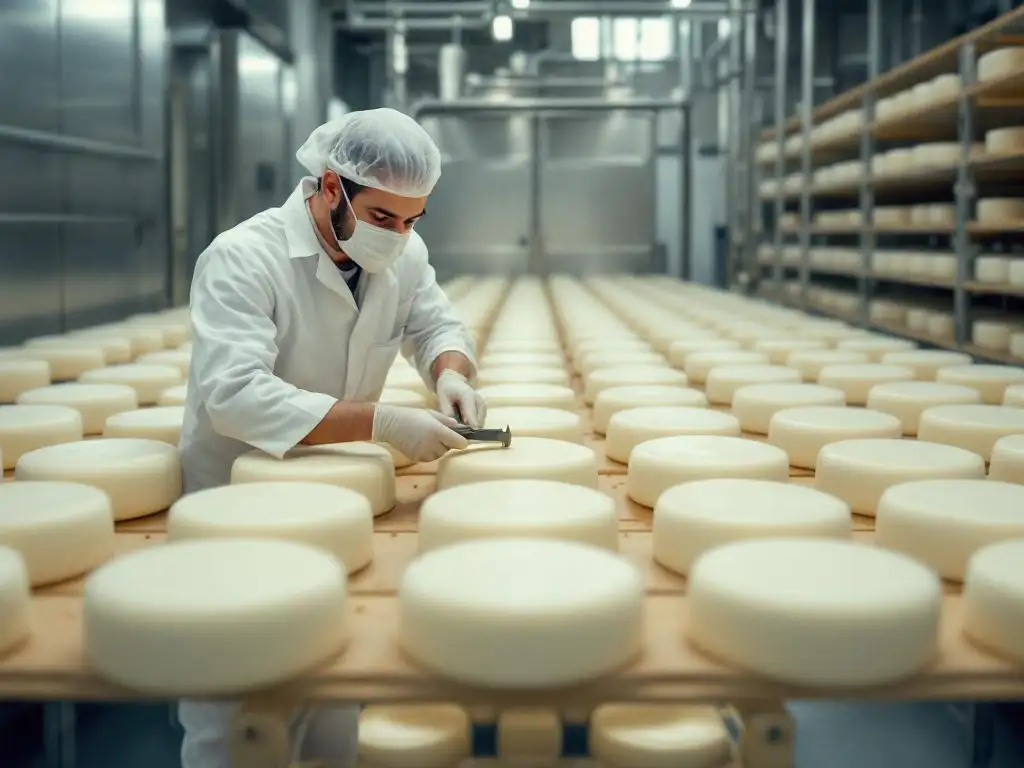
Standardisation in goat cheese production refers to the systematic control of variables throughout the manufacturing process to ensure consistent product quality, safety, and characteristics. This involves regulating milk composition, production parameters, and quality standards to create uniform products that meet specific requirements every time. For commercial producers, standardisation is essential for maintaining customer trust, ensuring regulatory compliance, and achieving operational efficiency in an increasingly competitive market.
What is standardisation in goat cheese production and why does it matter?
Standardisation in goat cheese manufacturing encompasses the precise control of milk composition, processing temperatures, pH levels, moisture content, and ageing conditions. This systematic approach ensures that each batch of cheese maintains consistent fat content, protein levels, texture, and flavour profile regardless of seasonal variations or individual animal differences.
The importance of standardisation extends far beyond simple consistency. Commercial cheese producers rely on standardised processes to meet strict regulatory requirements for food safety and labelling accuracy. When customers order a specific goat cheese product, they expect the same taste, texture, and quality every time. This predictability is crucial for B2B relationships in which manufacturers use cheese as an ingredient in their own products.
Operational efficiency improves dramatically with standardisation. Production planning becomes more accurate when outcomes are predictable, reducing waste and optimising resource allocation. Quality control systems can identify deviations quickly, preventing entire batches from failing to meet specifications. This systematic approach also enables producers to scale their operations while maintaining the artisanal qualities that make goat cheese special.
How does standardisation affect the quality and taste of goat cheese?
Standardised production methods directly influence the sensory characteristics of goat cheese by controlling the factors that determine texture, flavour development, and appearance. When milk fat content is standardised to specific percentages, the resulting cheese achieves consistent creaminess and mouthfeel. Protein standardisation ensures proper curd formation and final texture, while pH control determines the cheese’s tanginess and shelf life.
Temperature management throughout production affects enzyme activity and bacterial culture development, which are crucial for flavour formation. Standardised ageing conditions, including humidity and temperature controls, ensure predictable ripening patterns. This results in cheeses that develop their characteristic flavours at consistent rates, allowing producers to deliver products with reliable taste profiles.
The challenge lies in balancing standardisation with the preservation of traditional cheese characteristics. Modern techniques allow producers to maintain the authentic qualities of artisanal goat cheese while ensuring consistency. This involves careful selection of starter cultures, precise timing of production steps, and controlled environmental conditions that replicate traditional ageing caves. The result is cheese that honours traditional methods while meeting modern quality standards.
What are the main challenges in standardising goat cheese production?
Seasonal variations in goat milk composition present significant standardisation challenges, as milk quality fluctuates throughout the year based on diet, lactation stage, and environmental factors. Spring milk typically has different fat and protein content from autumn milk, requiring constant adjustments to maintain consistent cheese quality. Individual animals within the same herd can produce milk with varying compositions, adding another layer of complexity.
Maintaining artisanal qualities while scaling production requires sophisticated equipment and technology. Small-scale traditional methods often rely on intuitive adjustments that are difficult to replicate in larger operations. Automated systems must be calibrated to mimic hand-crafted techniques while ensuring reproducibility. This includes investments in precision temperature controls, automated stirring systems, and humidity-controlled ageing facilities.
Balancing traditional methods with modern food safety standards creates additional complexity. Traditional cheese-making practices may conflict with contemporary hygiene requirements, necessitating careful adaptation of time-honoured techniques. Producers must document every step of their standardised processes to demonstrate compliance with international food safety certifications while preserving the authentic character of their products.
Which standardisation methods work best for different types of goat cheese?
Fresh goat cheese requires standardisation focused on moisture control and pH management, with typical targets of 70–80% moisture and pH levels between 4.5 and 4.8. Process controls include standardised pasteurisation temperatures, consistent culture addition rates, and precise drainage times. Quality checkpoints monitor texture, spreadability, and flavour development at specific intervals during production.
Soft-ripened varieties demand additional standardisation of surface culture application and ageing environment controls. Temperature and humidity must be precisely regulated during the ripening period, typically maintaining 12–14°C with 85–95% humidity. Testing protocols include regular pH monitoring of both the surface and interior, along with visual inspection for proper rind development.
Aged goat cheeses require long-term environmental standardisation, with specific protocols for turning schedules, surface treatments, and ageing room conditions. Industrial manufacturers often employ automated ageing rooms with computer-controlled climate systems, while artisanal producers may use manual methods with strict monitoring procedures. The key difference lies in scale: large-scale operations rely on automation and continuous monitoring systems, while smaller producers achieve standardisation through meticulous record-keeping and manual adjustments based on established parameters.
How De Jong Cheese helps with goat cheese standardisation
We at De Jong Cheese bring decades of expertise in standardised goat cheese production specifically designed for B2B clients who require consistent, high-quality products. Our comprehensive quality control systems ensure that every batch meets exact specifications, whether you need fresh goat cheese for salad production or aged varieties for gourmet applications.
Our standardisation capabilities include:
- Rigorous quality control at every production stage
- Consistent product specifications across all batches
- Flexible bulk packaging options for industrial use
- Custom product development to meet specific requirements
- International food safety certifications, including BRC and IFS
- Private-label production to your specifications
We understand the challenges B2B clients face in maintaining consistency across their product lines. Our extensive product range includes fresh, soft-ripened, and aged goat cheeses, all produced with the same commitment to standardisation and quality. Whether you are a food manufacturer, wholesaler, or meal kit producer, we ensure that our cheeses integrate seamlessly into your production processes.
Ready to discuss how our standardised goat cheese solutions can benefit your business? Contact our team to explore customisation options and discover why leading food businesses in more than 20 countries trust us for their goat cheese needs. You can also find our products at various locations throughout the Netherlands.
Frequently Asked Questions
How can small-scale producers implement standardisation without losing their artisanal identity?
Small producers can maintain their artisanal character by implementing selective standardisation focused on critical control points like pH monitoring and temperature logging, while keeping traditional techniques for stirring, turning, and ageing. Start with simple documentation systems and gradually introduce precision tools like digital thermometers and pH meters that don’t alter traditional methods but provide consistent measurement data.
What equipment investments are essential for beginning standardisation in goat cheese production?
Essential equipment includes accurate pH meters, calibrated thermometers, humidity monitors for ageing rooms, and precise scales for ingredient measurements. For milk standardisation, a basic milk analyser to test fat and protein content is crucial. These tools typically require an initial investment of €5,000-15,000 for small operations, with larger automated systems ranging from €50,000-200,000 depending on production scale.
How do I handle batch variations when my goat milk supply comes from multiple small farms?
Create milk reception protocols that test and record fat, protein, and somatic cell counts from each supplier, then blend milk strategically to achieve target compositions. Establish quality agreements with suppliers specifying acceptable ranges for milk components, and consider implementing a payment system based on milk quality parameters to incentivise consistency from your suppliers.
What are the most common standardisation mistakes that lead to product recalls or quality issues?
The most critical mistakes include inadequate calibration of measuring equipment, inconsistent record-keeping that prevents traceability, and over-reliance on automation without regular manual quality checks. Additionally, failing to account for seasonal milk variations in standardisation protocols and not maintaining proper environmental controls in ageing facilities can lead to significant quality deviations and potential safety issues.
How long does it typically take to see ROI from implementing standardisation systems?
Most producers see return on investment within 12-18 months through reduced waste, fewer quality rejections, and improved production efficiency. Standardisation typically reduces product loss by 15-25% and can increase production capacity by 20-30% without additional labour, while premium pricing for consistent quality products can add 10-15% to profit margins.
Can standardisation protocols be adjusted for seasonal or limited-edition cheese varieties?
Yes, standardisation frameworks can include controlled variation protocols for seasonal products by documenting specific parameter ranges for each variety rather than fixed values. Create separate standard operating procedures (SOPs) for seasonal cheeses that maintain critical safety parameters while allowing flexibility in characteristics like moisture content or ageing time to highlight seasonal milk qualities.