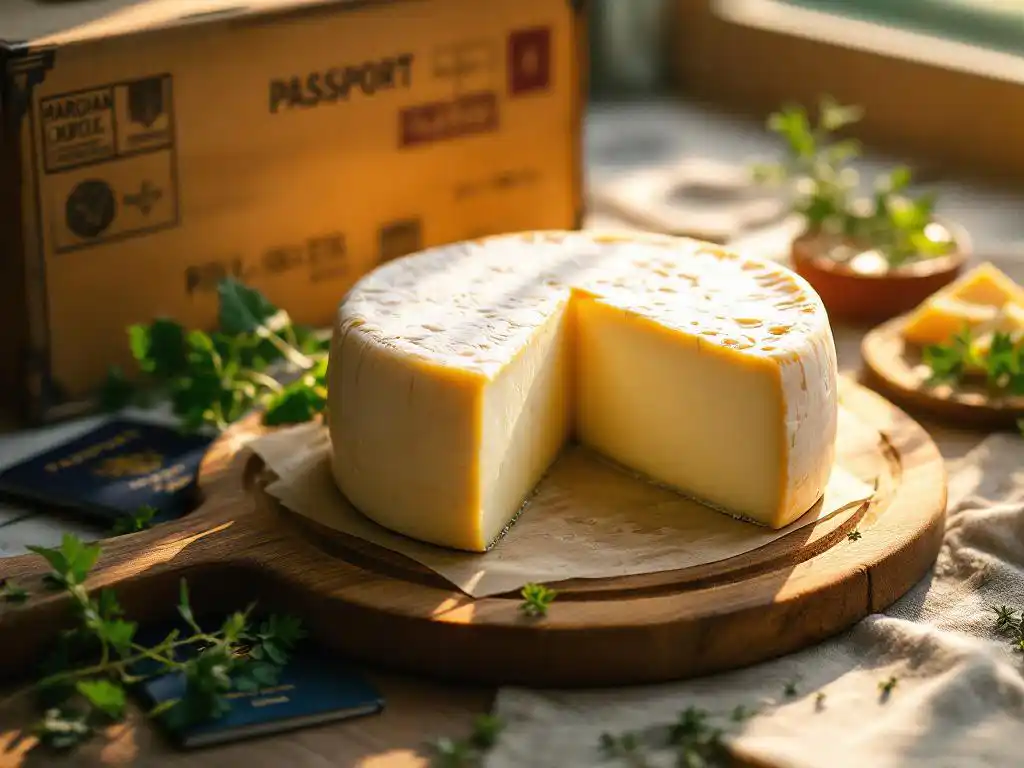
Goat cheese provides unique advantages for manufacturers developing export-ready food products. Its naturally longer shelf life compared with cow’s milk cheeses, distinctive flavour profile that appeals to international markets, and versatility across various food applications make it an ideal ingredient for products designed for global distribution. The growing demand for goat cheese in international markets, combined with its ability to maintain quality during extended shipping times, positions it as a strategic choice for export-focused food manufacturers.
What makes goat cheese ideal for export-ready food products?
Goat cheese possesses several properties that make it particularly suitable for export products. Its naturally lower moisture content than many cow’s milk cheeses extends shelf life, while its unique tangy flavour profile differentiates products in competitive international markets. The cheese also maintains its texture and quality characteristics better during the temperature fluctuations common in international shipping.
The growing international demand for goat cheese reflects changing consumer preferences towards perceived healthier dairy options. Markets across Europe, North America, and Asia increasingly seek goat cheese products, creating opportunities for manufacturers to expand their export portfolios. The cheese’s versatility allows it to enhance both traditional and innovative food products, from Mediterranean-style salads to modern fusion cuisine.
Goat cheese also offers practical advantages for product development. Its natural white colour provides visual appeal without artificial additives, while its creamy texture works well in both cold and heated applications. These characteristics help manufacturers create products that meet diverse market preferences without extensive reformulation for different regions.
How does goat cheese meet international food safety standards?
Goat cheese production typically adheres to stringent international food safety protocols that facilitate export processes. Most commercial goat cheese undergoes pasteurisation, meeting requirements for markets including the United States, the European Union, and Asia-Pacific regions. The controlled production environment and standardised processes ensure consistent compliance with various international regulations.
From an allergen perspective, goat cheese presents advantages for international markets. While it contains lactose and milk proteins, some consumers who experience sensitivity to cow’s milk products find goat cheese more digestible. This characteristic, combined with clear allergen labelling, helps manufacturers address diverse dietary requirements across different markets.
Quality certifications common in goat cheese production include HACCP, BRC, and IFS standards. These internationally recognised certifications streamline export documentation and customs processes. Additionally, many goat cheese producers maintain specific certifications for organic, halal, or kosher markets, expanding potential export destinations.
The traceability systems implemented in modern goat cheese production also support international trade. From farm to finished product, documentation tracks each production stage, satisfying import requirements for markets with strict food safety regulations. This comprehensive approach to food safety reduces barriers to market entry and builds trust with international buyers.
Which export-ready products benefit most from goat cheese ingredients?
Ready-to-eat salads represent one of the most successful applications for goat cheese in export products. The cheese adds premium appeal to Mediterranean, Greek, and gourmet salad ranges while maintaining quality throughout the cold chain. Its distinctive flavour complements vegetables, nuts, and dried fruits commonly used in international salad products.
Pizza and pasta products also benefit significantly from goat cheese additions. The cheese melts smoothly without excessive oil separation, maintaining visual appeal in frozen pizzas destined for export markets. In pasta products, crumbled or creamy goat cheese provides flavour complexity that differentiates products in competitive international retail environments.
Sandwich fillings and wraps incorporating goat cheese appeal to health-conscious consumers globally. The cheese pairs well with roasted vegetables, herbs, and lean proteins, creating products that align with international trends towards healthier convenience foods. Its spreadable varieties work particularly well in sandwich applications, maintaining texture without separation throughout an extended shelf life.
Meal kit components represent an emerging opportunity for goat cheese in export markets. Pre-portioned goat cheese maintains quality during shipping and adds perceived value to meal kit offerings. The cheese’s versatility allows it to feature in various cuisine styles, from traditional European dishes to contemporary fusion recipes that appeal to adventurous international consumers.
What packaging formats work best for goat cheese in export products?
Bulk packaging formats for industrial processing provide an efficient solution for manufacturers creating export products. Vacuum-sealed blocks in 1–5 kilogram sizes maintain quality while minimising packaging waste and shipping costs. These formats allow manufacturers to portion the cheese according to their specific product requirements while ensuring maximum shelf life.
Modified atmosphere packaging (MAP) technology significantly extends the shelf life of goat cheese in export products. By replacing oxygen with nitrogen or carbon dioxide, MAP prevents oxidation and microbial growth during international shipping. This technology works particularly well for pre-crumbled or sliced goat cheese used in ready-to-eat products.
Portion-controlled formats suit meal kits and foodservice applications in export markets. Individual portions between 20 and 50 grams, sealed in protective packaging, maintain quality while providing convenience for end users. These formats reduce waste and ensure consistent product quality across different markets and distribution channels.
For innovative packaging solutions, some manufacturers use edible coatings or natural preservatives to extend shelf life without compromising clean-label requirements. Resealable packaging options are also gaining popularity in export markets, allowing consumers to maintain product freshness after opening. The choice of packaging material considers both product protection and environmental sustainability, which are increasingly important in international markets.
How does DeJong Cheese support export-ready product development?
We at DeJong Cheese provide comprehensive support for manufacturers developing export-ready products through our specialised goat cheese solutions. Our experience serving over 20 countries gives us unique insights into international market requirements and consumer preferences. We offer customised goat cheese formulations that meet specific product applications while maintaining the quality standards necessary for global distribution.
Our support includes:
- Custom product development tailored to your export market requirements
- Private-label options that allow you to build your own brand internationally
- Bulk packaging formats from 1 kg to 5 kg for efficient industrial processing
- Technical support throughout product development and launch phases
- Highest food safety certifications, including BRC and IFS standards
- Flexible production capabilities for both small and large-volume orders
We understand the complexities of international food trade and work closely with our partners to ensure their products meet all necessary requirements. Our traditional craftsmanship, combined with modern production facilities, allows us to deliver consistent quality that performs reliably in export markets. Whether you need fresh goat cheese for salads, aged varieties for premium applications, or custom formulations for innovative products, we provide the expertise and flexibility to support your international ambitions.
Ready to explore how our goat cheese can enhance your export products? Contact our team to discuss your specific export product requirements and discover how we can support your international ambitions.
Frequently Asked Questions
What are the typical minimum order quantities for export-ready goat cheese products?
Minimum order quantities vary depending on the product format and destination market, but typically start from one pallet (approximately 500-800 kg) for bulk industrial formats. For specialised or custom formulations, manufacturers often require initial test orders of 100-200 kg to validate product performance in their specific applications. Many suppliers offer flexible ordering options that scale with your business growth, allowing smaller initial orders with the possibility to increase volumes as your export markets develop.
How do I calculate the true shelf life of products containing goat cheese for different export destinations?
Calculate shelf life by subtracting transit time and distribution requirements from the total product shelf life – for example, if your goat cheese product has 90 days shelf life and shipping to Asia takes 30 days plus 14 days for distribution, you have 46 days of selling time. Consider temperature variations during transport, which can reduce shelf life by 10-20%, and always conduct shelf life testing under conditions that simulate your actual export route. Work with your cheese supplier to understand how different packaging options and formulations can extend viable selling time in your target markets.
What documentation is typically required when exporting products containing goat cheese?
Essential documentation includes a commercial invoice, packing list, bill of lading, and certificate of origin, plus specific dairy-related certificates such as health certificates from veterinary authorities and dairy establishment registration numbers. Many countries require additional documentation like fumigation certificates, radiation-free certificates, or specific compositional analyses showing fat content, moisture levels, and microbiological results. Some markets also require halal or kosher certification, even for conventional products, and proof of pasteurisation with specific time-temperature documentation.
How can I prevent common quality issues with goat cheese during long-distance shipping?
Prevent moisture migration by using appropriate barrier packaging and including moisture-absorbing pads in secondary packaging, especially for crumbled formats. Maintain cold chain integrity by using data loggers to monitor temperature throughout shipping and selecting shipping routes with minimal transhipment points. Pre-condition products at shipping temperature for 24-48 hours before dispatch to prevent condensation, and consider using insulated shipping containers or reefer units set 2°C below optimal storage temperature to account for door openings during transit.
What are the most profitable export markets for goat cheese products currently?
The United States, Japan, and the UAE currently offer strong profit margins for premium goat cheese products, with growing demand in Singapore, Hong Kong, and major Chinese cities for European-style cheese products. Nordic countries show increasing interest in organic and artisanal goat cheese varieties, while Australia and New Zealand markets favour innovative ready-to-eat applications. Focus on markets where local goat cheese production is limited but consumer awareness is high, and consider metropolitan areas with established specialty food distribution networks for optimal pricing and market penetration.
How do I handle customs delays or rejections for dairy products at international borders?
Establish relationships with experienced customs brokers in your target markets who understand dairy product regulations and can expedite clearance processes. Always ship with 20-30% shelf life buffer to account for potential delays, and maintain comprehensive documentation including backup certificates and alternative laboratory test results. Create contingency plans with local cold storage facilities near major ports of entry, and consider product liability insurance that covers border rejections to protect against financial losses from regulatory issues beyond your control.
Related Articles
- What flavor varieties of goat cheese such as cranberry-cinnamon are popular in the food industry?
- What are the optimal storage conditions for frozen goat cheese curd?
- How do you shorten the search process for finding the right supplier of high-melt goat cheese?
- What are the benefits of goat cheese for foodservice?
- How long can goat cheese be displayed at room temperature during service?