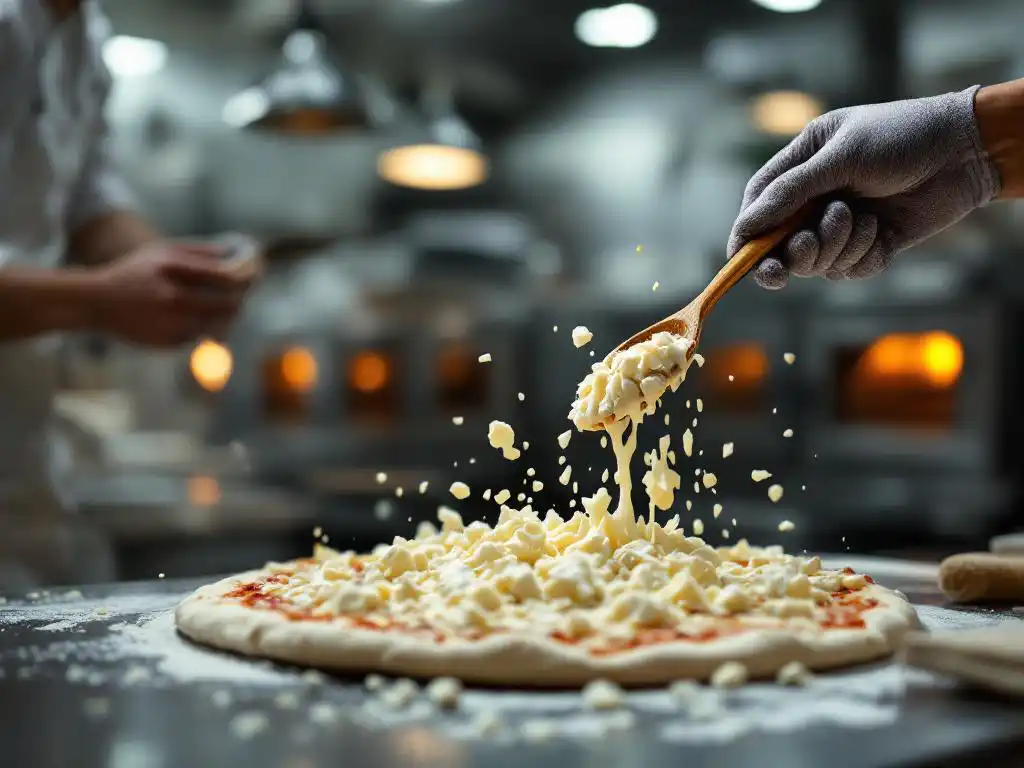
Goat cheese brings unique advantages to large-scale pizza production through its distinctive melting properties, tangy flavour profile, and versatile applications. Its lower melting point compared to traditional mozzarella creates a creamy texture that spreads evenly across pizzas, while the characteristic tang adds complexity to flavour profiles. For pizza manufacturers, goat cheese offers operational benefits including consistent performance in high-speed production lines, excellent freeze-thaw stability, and opportunities to create premium product lines that command higher margins.
What unique properties make goat cheese ideal for pizza manufacturing?
Goat cheese possesses several characteristics that make it particularly suitable for industrial pizza production. The cheese has a lower melting point than cow’s milk cheeses, typically melting at around 26–32°C compared to mozzarella’s 40–45°C, which means it requires less energy and time in pizza ovens. This property translates to faster production cycles and reduced energy costs in large-scale operations.
The protein structure in goat cheese differs significantly from traditional pizza cheeses. Goat’s milk contains smaller fat globules and different casein proteins, creating a naturally creamier texture when heated. This unique composition prevents the stringy, elastic texture associated with mozzarella, instead producing a smooth, spreadable consistency that distributes evenly across the pizza surface during baking.
Moisture content in goat cheese typically ranges from 45–60%, depending on the variety, which contributes to its excellent melting characteristics. The fat distribution throughout the cheese is more uniform than in many cow’s milk cheeses, preventing oil separation during high-temperature baking. This uniformity ensures consistent product quality across thousands of pizzas in industrial settings.
The distinctive tangy flavour profile of goat cheese adds complexity to pizzas without requiring additional seasoning or flavour enhancers. This natural flavour intensity means manufacturers can use less cheese while still achieving a robust taste profile, potentially reducing ingredient costs while maintaining product quality.
How does goat cheese perform in high-volume pizza production lines?
In automated pizza production environments, goat cheese demonstrates excellent performance characteristics. The cheese maintains its consistency when processed through high-speed depositing equipment, flowing smoothly through automated cheese applicators without clogging or requiring frequent adjustments. This reliability is crucial for maintaining production speeds of 100–200 pizzas per minute in modern facilities.
Temperature stability during production provides another significant advantage. Goat cheese can withstand the rapid temperature changes common in industrial pizza lines, from cold storage to ambient depositing temperatures to flash freezing, without developing texture issues. The cheese maintains its quality through conveyor belt systems operating at various speeds, adapting well to both slow artisanal lines and high-speed industrial operations.
Freeze-thaw stability represents a critical factor for frozen pizza manufacturers. Goat cheese exhibits minimal moisture migration during freezing, preventing the formation of ice crystals that can damage texture. Upon thawing and baking, the cheese retains its creamy consistency and does not separate or become grainy, ensuring consistent quality for consumers.
Production line efficiency improves with goat cheese due to its non-stringy nature. Unlike mozzarella, which can create cheese strings between pizzas or stick to equipment, goat cheese deposits cleanly, reducing waste and minimising production line cleaning requirements. This characteristic alone can increase overall equipment effectiveness by reducing downtime for maintenance.
What are the cost considerations for using goat cheese in commercial pizza production?
The economics of using goat cheese in pizza production involve multiple factors beyond simple ingredient pricing. While goat cheese typically commands a premium price compared to standard mozzarella, ranging from 15–30% higher per kilogram, the overall cost equation includes several offsetting benefits that can make it economically viable for certain product lines.
Yield advantages often compensate for higher raw material costs. Because goat cheese has intense flavour and superior melting properties, manufacturers can use 10–20% less cheese per pizza while maintaining consumer satisfaction. This reduction in cheese usage can partially or fully offset the higher per-unit cost, particularly in premium pizza lines where flavour complexity justifies higher retail prices.
Waste reduction contributes significantly to cost efficiency. The clean depositing characteristics of goat cheese reduce product loss during application, while its stability during freezing minimises quality rejections. Many manufacturers report waste reductions of 5–8% when switching from traditional cheese blends to goat cheese for specific product lines.
Market positioning opportunities allow manufacturers to command premium prices for goat cheese pizzas. Consumer willingness to pay 20–40% more for artisanal or gourmet pizzas containing goat cheese creates margin opportunities that exceed the increased ingredient costs. This premium positioning particularly appeals to health-conscious consumers and those seeking unique flavour experiences.
Supply chain considerations affect long-term cost planning. While seasonal variations in goat’s milk production can cause price fluctuations of 10–15%, establishing direct relationships with specialised suppliers often provides more stable pricing than commodity cheese markets.
Which types of pizzas benefit most from goat cheese in large-scale production?
Mediterranean-style pizzas represent the most successful application for goat cheese in commercial production. These pizzas, featuring ingredients like spinach, sun-dried tomatoes, olives, and herbs, complement the tangy profile of goat cheese perfectly. The cheese acts as a flavour bridge between various Mediterranean ingredients, creating cohesive taste profiles that resonate with consumers seeking authentic flavours.
Vegetarian and plant-forward pizzas benefit significantly from goat cheese inclusion. The cheese provides rich, complex flavours that compensate for the absence of meat products, while its creamy texture contrasts beautifully with roasted vegetables. Popular combinations include goat cheese with caramelised onions, roasted red peppers, or seasonal vegetables like butternut squash or beetroot.
Breakfast and brunch pizzas represent an emerging category where goat cheese excels. Its compatibility with eggs, fresh herbs, and breakfast vegetables creates unique morning meal options. The lighter texture and digestibility of goat cheese appeal to consumers seeking less heavy breakfast alternatives.
Gourmet and artisanal pizza lines leverage goat cheese to justify premium pricing. Combinations featuring fig, prosciutto, rocket, or truffle oil paired with goat cheese allow manufacturers to create distinctive offerings that stand out in crowded markets. These pizzas typically achieve 30–50% higher margins than standard varieties.
Health-conscious product lines benefit from goat cheese’s nutritional profile. The cheese is naturally lower in lactose and contains different proteins than cow’s milk cheese, making it suitable for some consumers with dairy sensitivities. Marketing these benefits allows manufacturers to tap into growing health and wellness trends.
What supply chain advantages does goat cheese offer pizza manufacturers?
Specialised goat cheese suppliers often provide more flexible ordering arrangements than large commodity cheese distributors. These suppliers typically accommodate smaller minimum orders and offer more frequent delivery schedules, allowing pizza manufacturers to maintain fresher inventory and reduce storage costs. This flexibility proves particularly valuable for manufacturers producing seasonal or limited-edition pizza varieties.
Local sourcing opportunities abound in many regions, as goat farming operations tend to be smaller and more geographically distributed than industrial dairy farms. Partnering with regional goat cheese producers can reduce transportation costs, support local-economy messaging, and provide marketing advantages through farm-to-table storytelling.
Quality consistency from specialised suppliers often exceeds that of commodity cheese markets. Goat cheese producers focusing on the foodservice industry maintain strict quality standards and can provide consistent product specifications year-round. This reliability reduces quality control issues and ensures predictable production outcomes.
Inventory management becomes simpler with goat cheese due to its typically longer shelf life compared to fresh mozzarella. Many goat cheese varieties suitable for pizza production maintain quality for 60–90 days under proper storage conditions, reducing waste from expired inventory and allowing for more efficient production planning.
Certification processes for goat cheese suppliers tend to be more streamlined, as many operate under stringent quality systems to serve premium markets. These existing certifications often meet or exceed pizza manufacturers’ requirements, simplifying vendor approval processes and reducing audit costs.
How DeJong Cheese supports large-scale pizza production needs
We at DeJong Cheese understand the unique challenges pizza manufacturers face when incorporating speciality cheeses into high-volume production. Our approach combines traditional craftsmanship with modern production capabilities to deliver consistent, high-quality goat cheese solutions tailored specifically for industrial pizza applications.
Our specialised offerings for pizza manufacturers include:
- Bulk packaging formats from 1 kg to 10 kg blocks, designed for easy handling in automated systems
- Custom melting profiles developed to match specific oven temperatures and production speeds
- Consistent moisture content (±2%), ensuring predictable performance across production runs
- Pre-crumbled options that flow smoothly through automated cheese applicators
- Extended-shelf-life formulations maintaining quality for 90+ days
Technical support forms a cornerstone of our partnership approach. Our team collaborates with pizza manufacturers to optimise cheese specifications for their unique production requirements. Whether you need specific melting characteristics for conveyor ovens or freeze-thaw stability for frozen pizza lines, we develop customised solutions that integrate seamlessly into existing operations.
Our food safety certifications exceed industry standards, providing peace of mind for international operations. With FSSC 22000, BRC, and IFS certifications, we ensure every batch meets the stringent requirements of global foodservice operations. Our quality management systems guarantee consistent product specifications, reducing variability in your production processes.
Ready to explore how premium goat cheese can elevate your pizza offerings? Our team is available to discuss your specific production needs and develop tailored solutions.
Frequently Asked Questions
How do I calculate the right amount of goat cheese to use when converting from mozzarella-based recipes?
Start by using 80-85% of the mozzarella weight when substituting with goat cheese, as its intense flavour and superior coverage mean you need less. Test your specific recipe in small batches first, adjusting based on your desired flavour intensity and coverage. Consider that goat cheese spreads more during melting, so factor in a 10-15% increase in surface coverage compared to mozzarella.
What equipment modifications are needed to handle goat cheese in existing pizza production lines?
Most modern pizza lines require minimal modifications for goat cheese. You may need to adjust cheese applicator settings for the creamier consistency and reduce hopper temperatures by 3-5°C to prevent premature softening. Consider installing finer mesh screens in your depositing equipment to handle pre-crumbled varieties, and ensure your cold storage maintains 2-4°C for optimal consistency.
How can I prevent goat cheese from burning or over-browning in high-temperature ovens?
Position goat cheese under other toppings or blend it with mozzarella (30:70 ratio) to protect it from direct heat. Reduce oven temperatures by 10-15°C or decrease baking time by 10-20% compared to all-mozzarella pizzas. For conveyor ovens above 300°C, consider applying goat cheese in the last third of the baking cycle using a secondary applicator.
What are the most common mistakes when first introducing goat cheese pizzas to a product line?
The biggest mistakes include using too much cheese (creating an overpowering flavour), pairing it with incompatible toppings like heavy meats or strong sauces, and not adjusting production temperatures. Additionally, many manufacturers fail to properly train staff on the different handling requirements and don’t adequately communicate the premium positioning to sales teams, missing margin opportunities.
How do I maintain consistent goat cheese quality across different seasons and suppliers?
Establish specifications for moisture content (45-50% target), pH levels (4.5-4.8), and fat content with your suppliers, requiring certificates of analysis with each delivery. Implement incoming quality checks using simple melt tests and maintain relationships with 2-3 qualified suppliers to ensure continuity. Consider contracting annual volumes with fixed specifications to minimise seasonal variations.
What's the best way to market goat cheese pizzas to maximise ROI?
Focus marketing on the artisanal, premium aspects and health benefits like easier digestibility and lower lactose content. Highlight the Mediterranean or gourmet positioning with photography emphasising the creamy texture and quality ingredients. Price these pizzas 25-35% above standard lines and use terms like ‘creamy goat cheese’ or ‘tangy chèvre’ rather than just ‘goat cheese’ to enhance perceived value.
Related Articles
- How does COKZ inspection work at a Dutch goat cheese producer?
- How does DGZK certification contribute to sustainable goat cheese production?
- How do you plan the procurement of hard goat cheese with a delivery time of three weeks?
- What are the benefits of 7-gram goat cheese pucks for portioning in tapas products?
- What are key performance indicators for goat cheese procurement?