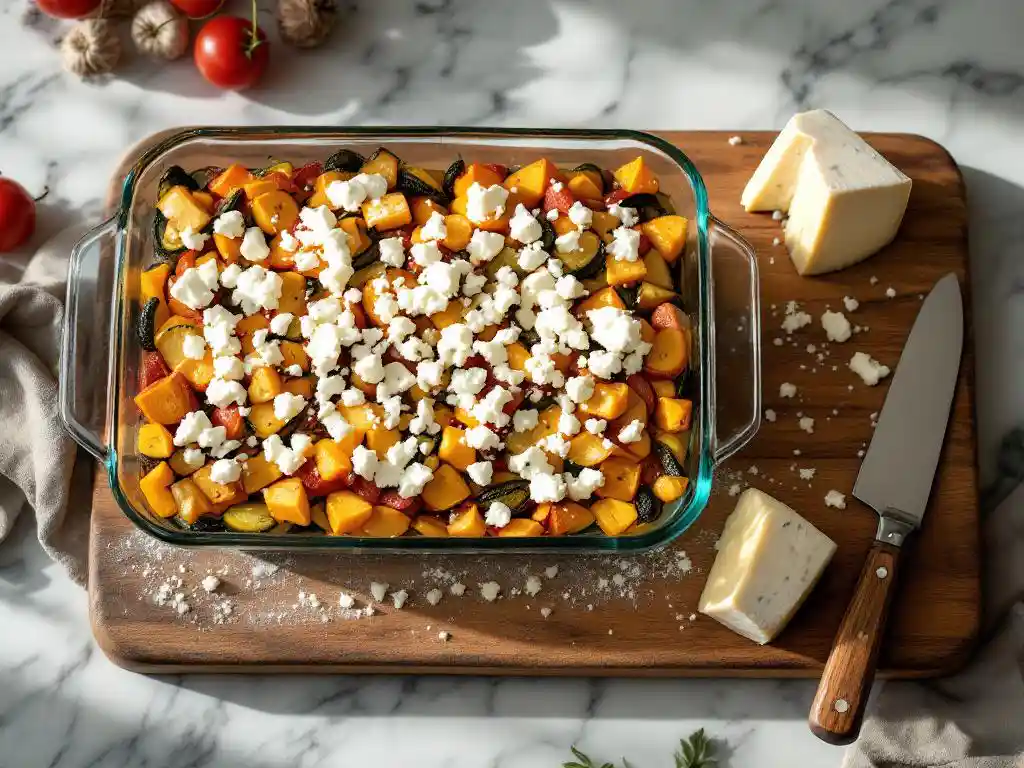
Goat cheese brings unique properties to layered ready meals that solve common production challenges while meeting consumer demand for premium ingredients. Its creamy texture, excellent melting characteristics, and stable flavour profile make it particularly suitable for multi-layered dishes that undergo industrial processing, freezing, and reheating. Ready meal manufacturers increasingly recognise goat cheese as a versatile ingredient that maintains quality throughout the supply chain while offering differentiation in a competitive market.
What makes goat cheese ideal for layered ready meal production?
Goat cheese excels in layered ready meals due to its superior melting properties and moisture retention capabilities. Unlike many cheeses that separate or become grainy during reheating, goat cheese maintains a smooth, creamy consistency that enhances the overall texture of layered dishes. Its naturally lower melting point ensures even distribution between layers without excessive oil separation.
The unique protein structure of goat cheese contributes to its stability during temperature fluctuations. The smaller fat globules and different casein composition compared to cow’s milk cheese result in better emulsification throughout cooking and storage processes. This characteristic prevents the common issue of cheese layers becoming rubbery or separating from other ingredients during the freeze–thaw cycle.
Flavour stability represents another crucial advantage. Goat cheese maintains its mild, tangy profile through industrial cooking processes without developing bitter notes or overwhelming other ingredients. This consistency allows manufacturers to predict final product taste accurately, reducing batch variations and ensuring consumer satisfaction across production runs.
How does goat cheese perform in different ready meal applications?
In lasagnas and similar pasta-based layered meals, goat cheese creates creamy layers that bind well with tomato sauces and vegetables. The cheese melts evenly between pasta sheets, preventing dry spots while maintaining structural integrity. This performance remains consistent whether the product undergoes conventional oven reheating or microwave preparation.
Mediterranean-style dishes like moussaka benefit particularly from goat cheese integration. The cheese complements aubergine and meat layers without overpowering traditional spice profiles. Its lighter texture compared to heavy béchamel alternatives appeals to health-conscious consumers while delivering authentic taste experiences.
Vegetable gratins showcase goat cheese’s versatility in plant-forward applications. The cheese creates golden, appealing tops while penetrating vegetable layers to add richness without excessive heaviness. Root vegetables, courgettes, and leafy greens all pair exceptionally well with goat cheese, maintaining distinct textures while achieving harmonious flavour integration.
Industrial testing demonstrates that goat cheese performs consistently across various cooking methods. Whether blast-chilled, frozen, or kept refrigerated, the cheese maintains its properties through distribution and home preparation. This reliability makes production planning more predictable and reduces quality control concerns.
What are the production advantages of using goat cheese in layered meals?
Goat cheese offers extended shelf life in ready meal applications due to its natural acidity and balanced moisture content. This characteristic reduces the risk of spoilage and extends product viability throughout the distribution chain. The cheese’s stability means fewer preservatives are needed, aligning with clean-label trends.
Manufacturing efficiency improves with goat cheese integration. The cheese’s consistent portioning properties work well with automated assembly lines, reducing waste and ensuring uniform product quality. Its spreadable nature at various temperatures allows flexible production scheduling without concerns about the cheese hardening or becoming unworkable.
Quality maintenance through industrial processing represents a significant advantage. Goat cheese withstands high-temperature cooking, rapid cooling, and extended frozen storage better than many alternative cheeses. This resilience translates to fewer product rejections and consistent quality from production to consumption.
The cheese’s natural binding properties reduce the need for additional stabilisers or thickeners in layered applications. This simplification of ingredient lists appeals to manufacturers seeking cleaner labels while maintaining product integrity. Cost efficiencies emerge from reduced ingredient complexity and improved production yields.
Which consumer trends make goat cheese attractive for ready meal developers?
Premium positioning opportunities arise from goat cheese inclusion in ready meals. Consumers increasingly associate goat cheese with artisanal quality and sophisticated flavour profiles. This perception allows manufacturers to justify higher price points while meeting demand for restaurant-quality convenience meals.
Health-conscious consumers drive significant demand for goat cheese options. The cheese contains easier-to-digest proteins and lower lactose levels than cow’s milk alternatives, appealing to those with mild dairy sensitivities. Additionally, goat cheese typically contains fewer calories and less cholesterol, supporting wellness-focused product development.
Mediterranean diet popularity continues to grow across markets, creating natural demand for authentic ingredients like goat cheese. Ready meals featuring this cheese tap into consumer desire for healthy, flavourful options inspired by traditional Mediterranean cuisine. This trend shows particular strength among millennials and health-aware demographics.
Differentiation in crowded ready meal categories becomes achievable through goat cheese integration. While competitors offer standard cheese options, goat cheese varieties stand out on shelves and in product descriptions. This uniqueness helps capture consumer attention and trial purchases in competitive retail environments.
How can manufacturers optimise goat cheese integration in meal assembly?
Strategic layer placement maximises goat cheese benefits in ready meals. Positioning cheese layers between moisture-rich ingredients like vegetables and sauces prevents drying while ensuring even distribution. Top layers benefit from mixing goat cheese with herbs or breadcrumbs for appealing browning during consumer reheating.
Pre-treatment methods enhance goat cheese performance in industrial settings. Tempering cheese to specific temperatures before application ensures optimal spreading and adhesion to other ingredients. Some manufacturers find success in blending goat cheese with small amounts of cream or milk to achieve the desired consistency for automated dispensing.
Portion control techniques should account for goat cheese’s flavour intensity. Generally, smaller quantities deliver impact compared to milder cheeses, allowing cost optimisation without compromising taste. Weight-based portioning systems work effectively, though volume-based methods may require adjustment for goat cheese’s varying density.
Complementary ingredient selection enhances overall product quality. Goat cheese pairs exceptionally well with roasted vegetables, fresh herbs, nuts, and honey-based glazes. Understanding these flavour affinities helps developers create more sophisticated ready meal offerings that showcase the cheese’s versatility.
How De Jong Cheese supports ready meal manufacturers with goat cheese solutions
We understand the unique challenges ready meal manufacturers face when incorporating speciality cheeses into layered products. Our expertise in goat cheese production since 1995 enables us to offer tailored solutions that address specific manufacturing requirements while maintaining the authentic quality that sets products apart.
Our support for ready meal manufacturers includes:
- Bulk packaging formats designed for efficient production line integration
- Custom formulations optimised for layered applications and industrial processing
- Technical consultation throughout product development phases
- Consistent quality standards backed by comprehensive food safety certifications
- Flexible delivery schedules aligned with production demands
- Private label options for brand differentiation
We work closely with manufacturers to develop goat cheese specifications that perform optimally in their specific ready meal applications. Whether you need cheese that maintains particular melting characteristics, achieves specific flavour profiles, or meets precise nutritional targets, our team provides hands-on support from concept to launch.
Ready to explore how our goat cheese solutions can enhance your layered ready meal products? Contact us directly to discuss your specific requirements and discover our full range of options.
Frequently Asked Questions
What's the best way to prevent goat cheese from becoming too runny in my ready meal formulations during microwave reheating?
To prevent excessive runniness, blend goat cheese with a small percentage of starch-based thickeners or combine it with harder cheeses in a 70:30 ratio. Additionally, using goat cheese with slightly lower moisture content (around 45-50%) and positioning it between absorbent layers like pasta or vegetables helps maintain optimal consistency during microwave reheating.
How can I calculate the right amount of goat cheese per portion to balance cost and flavour impact?
Start with 15-20g of goat cheese per 300g ready meal portion as a baseline, then adjust based on your specific application. Goat cheese delivers stronger flavour impact than mild cheeses, so you’ll typically need 30-40% less quantity compared to mozzarella or cheddar, resulting in cost savings while maintaining premium taste profiles.
What are the most common mistakes manufacturers make when first incorporating goat cheese into layered ready meals?
The three most common mistakes are: over-seasoning (goat cheese already has natural tanginess), applying cheese at too high temperatures causing separation, and using the wrong moisture content for specific applications. Always test your seasoning levels with the cheese included, apply goat cheese at temperatures below 60°C when possible, and match moisture content to your production method.
Which quality tests should I implement to ensure goat cheese maintains its properties throughout my ready meal's shelf life?
Implement freeze-thaw stability tests, measuring texture and oil separation after 3-5 cycles, and conduct accelerated shelf-life testing at various storage temperatures. Additionally, perform sensory evaluations at different points in the product’s life, focusing on texture retention, flavour stability, and visual appearance after both conventional and microwave reheating.
How can I adapt my existing cow's milk cheese-based recipes to incorporate goat cheese without complete reformulation?
Start by substituting 25-30% of your current cheese with goat cheese to test compatibility, then gradually increase the ratio. Reduce salt content by 10-15% to account for goat cheese’s natural tanginess, and consider adding a touch of cream to maintain moisture balance if replacing very mild cheeses. Most recipes tolerate up to 50% substitution without major adjustments.
What packaging modifications might be needed when using goat cheese in frozen ready meals?
Goat cheese’s higher moisture activity may require enhanced barrier packaging to prevent freezer burn and maintain quality. Consider using films with improved oxygen and moisture barriers, and ensure adequate headspace to accommodate any expansion. Modified atmosphere packaging (MAP) with nitrogen flushing can further extend quality retention during frozen storage.
How do I troubleshoot graininess or texture issues that develop in goat cheese layers after industrial processing?
Graininess typically results from pH imbalances or excessive heat exposure. Maintain pH levels between 5.8-6.2 in your overall formulation, and avoid direct high heat on cheese layers by using stepped cooking processes. If graininess persists, consider using younger goat cheeses (aged less than 4 weeks) or adding emulsifying salts at 0.5-1% to improve texture stability.
Related Articles
- How do you test a new goat cheese concept with a small test group?
- What does a buyer look for when selecting a producer of industrial goat cheese?
- How can goat cheese support new product development?
- What are successful goat cheese upselling techniques?
- What are the different textures of goat cheese varieties?